This model turns the constraints of using a large movement to its advantage, creating a dynamic, deep form that leverages the ample volume to substantiate its functions, resulting in an extraordinary presence. The design, composed of a contrast between black and green, combines beauty with the functionality of a watch. The case uses ceramic material to avoid affecting reception sensitivity, and features a highly glossy, smooth finish that cannot be achieved with plating. The vivid green coil encircling the outer edge of the dial is inspired by the antenna of the first radio-controlled watch. The bezel is placed on the sapphire glass surface, creating an expression as if it is floating, evoking the image of a satellite orbiting, and the motif of the green coil on the dial can be seen from the side, allowing enjoyment from every angle. The hour hand is three-dimensionally bent, and the letters engraved on the disc-type hand rotate, with precisely assembled parts operating in a small space. The way these parts function evokes the excitement of wearing a miniature city diorama on your wrist, offering a sense of fun that brings out the child in the user. Whether or not you are interested in watches, this model is designed to make you stop and stare. Such dramatic presentation is embodied in this watch.
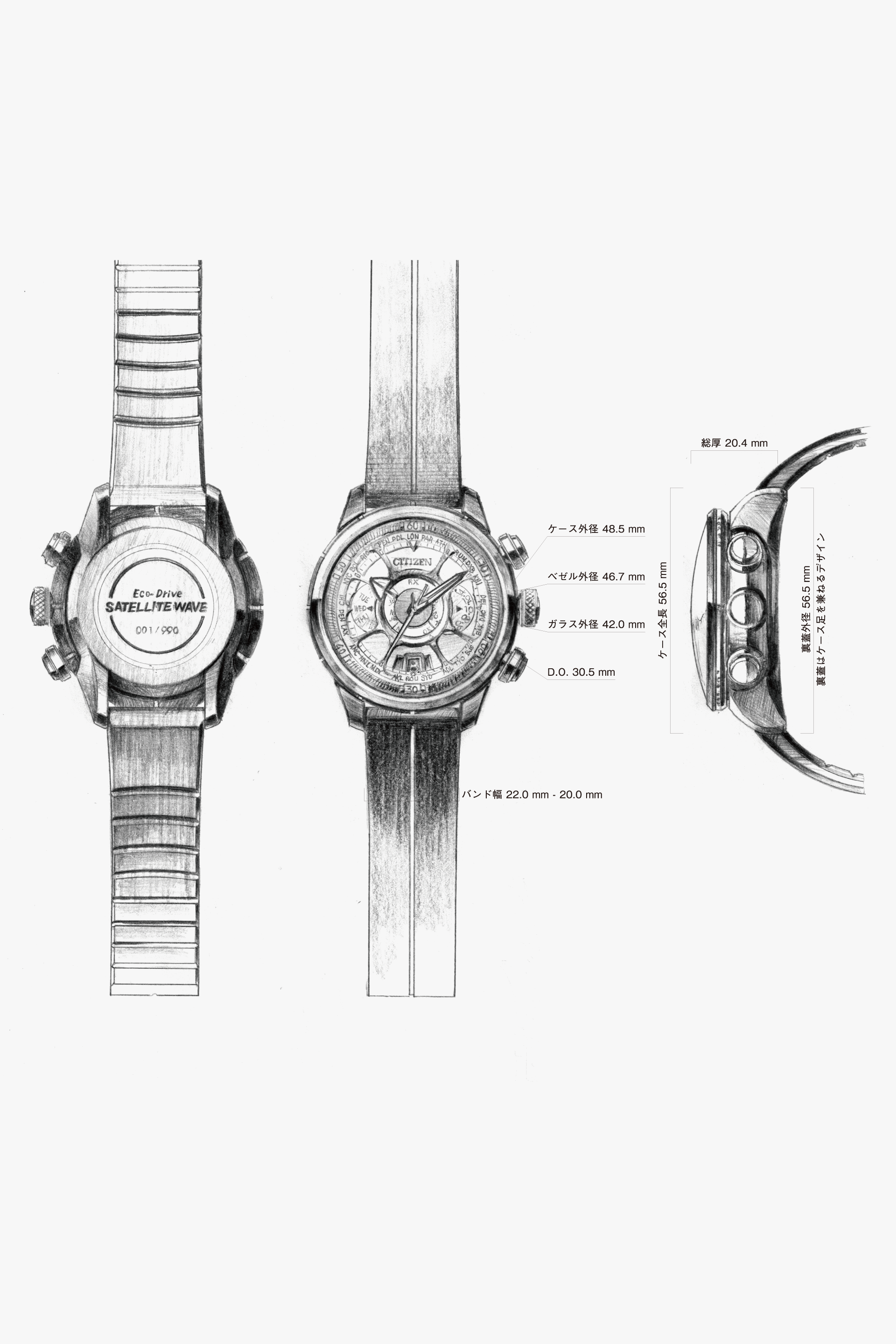
Parts composed of black ceramic/stainless steel (DLC) are accented with vivid green resin, expressing the sense of speed of receiving signals from outer space. The voluminous glass envelops the deep dial.
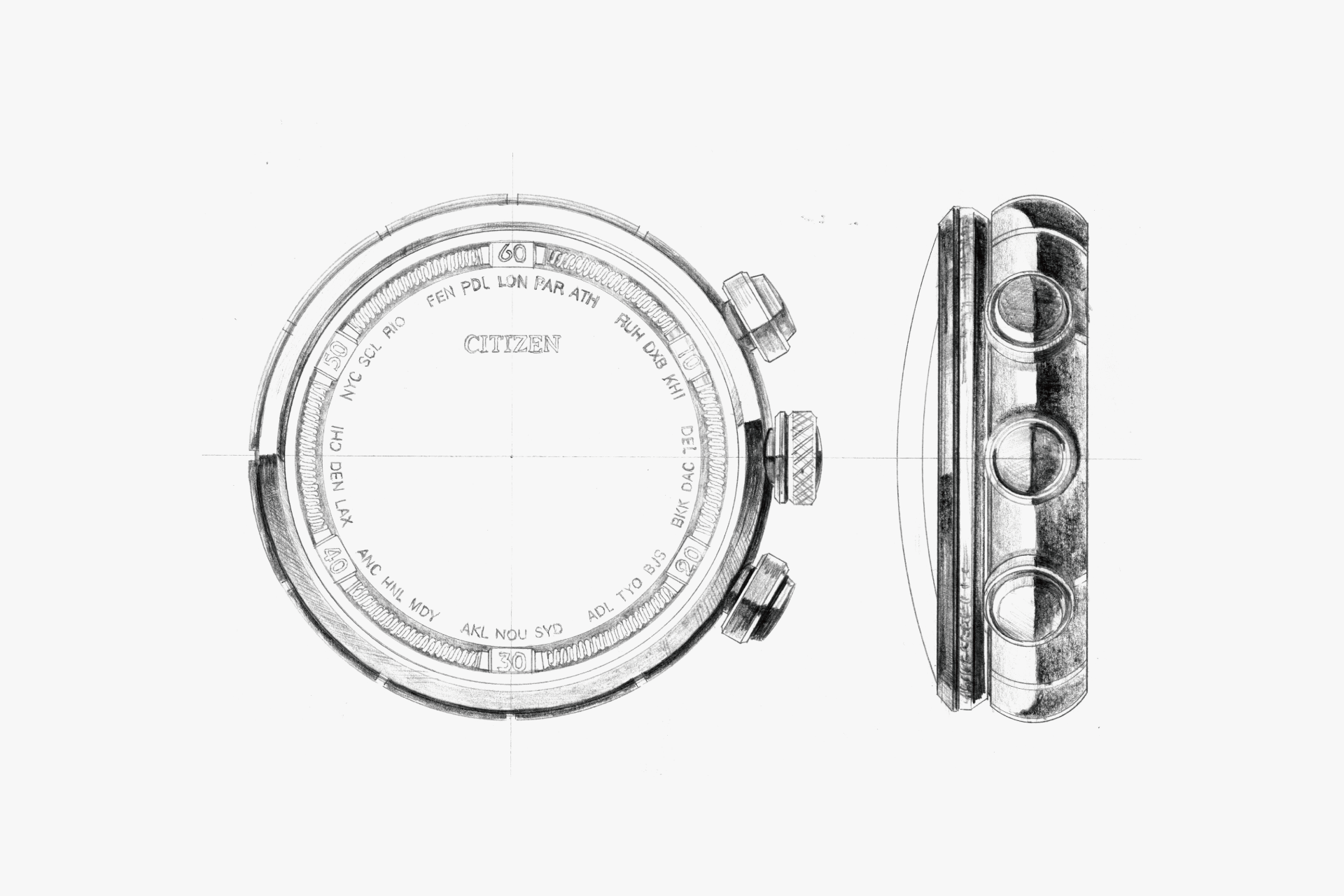
The case is separated from the lugs. By subdividing the parts, the fine finishing details can be beautifully expressed. The beauty of the green resin finish on the side is where this effect is most evident.
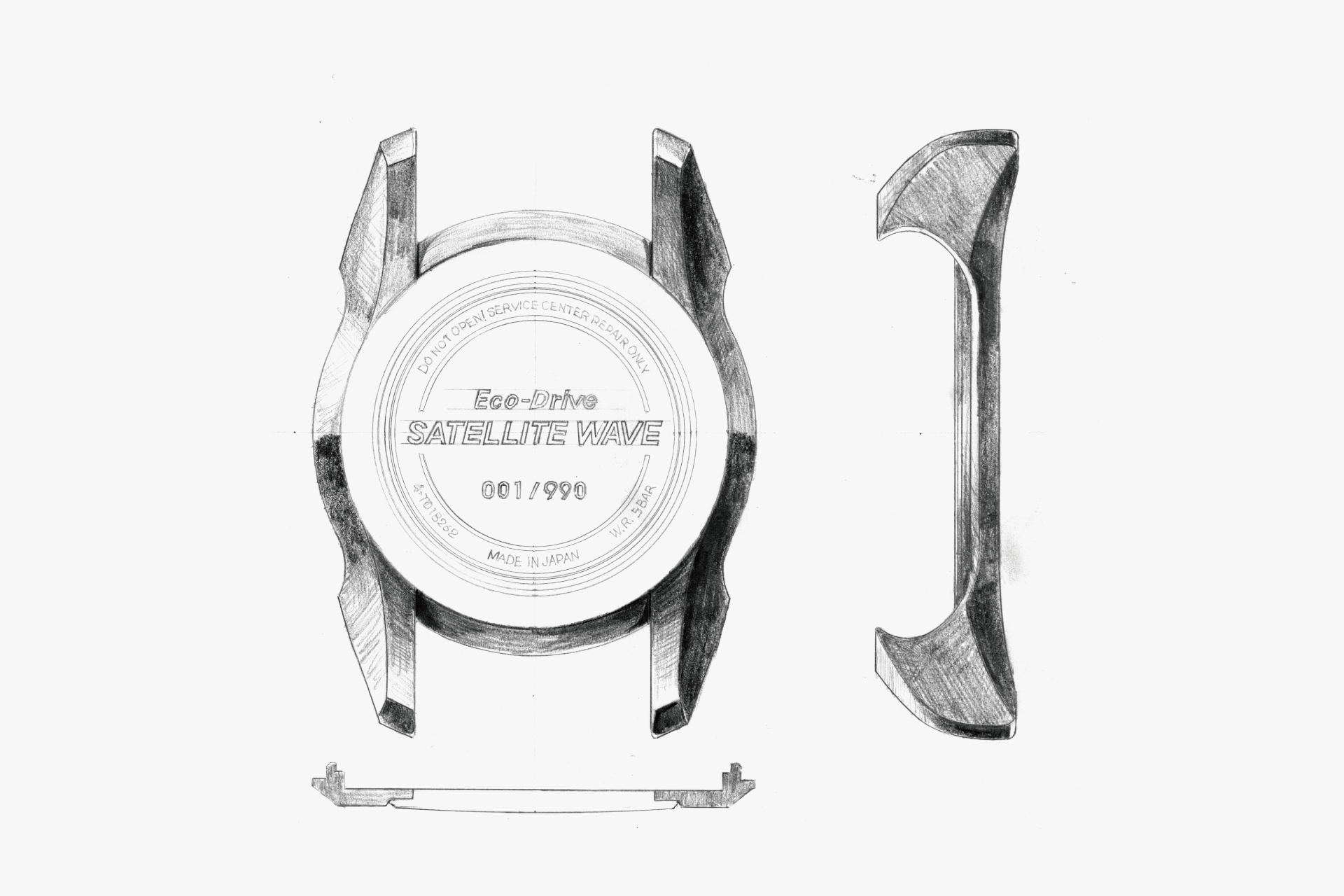
The case lugs and case back are integrated into one structure. This idea is to create an expression that wraps around the main case body.
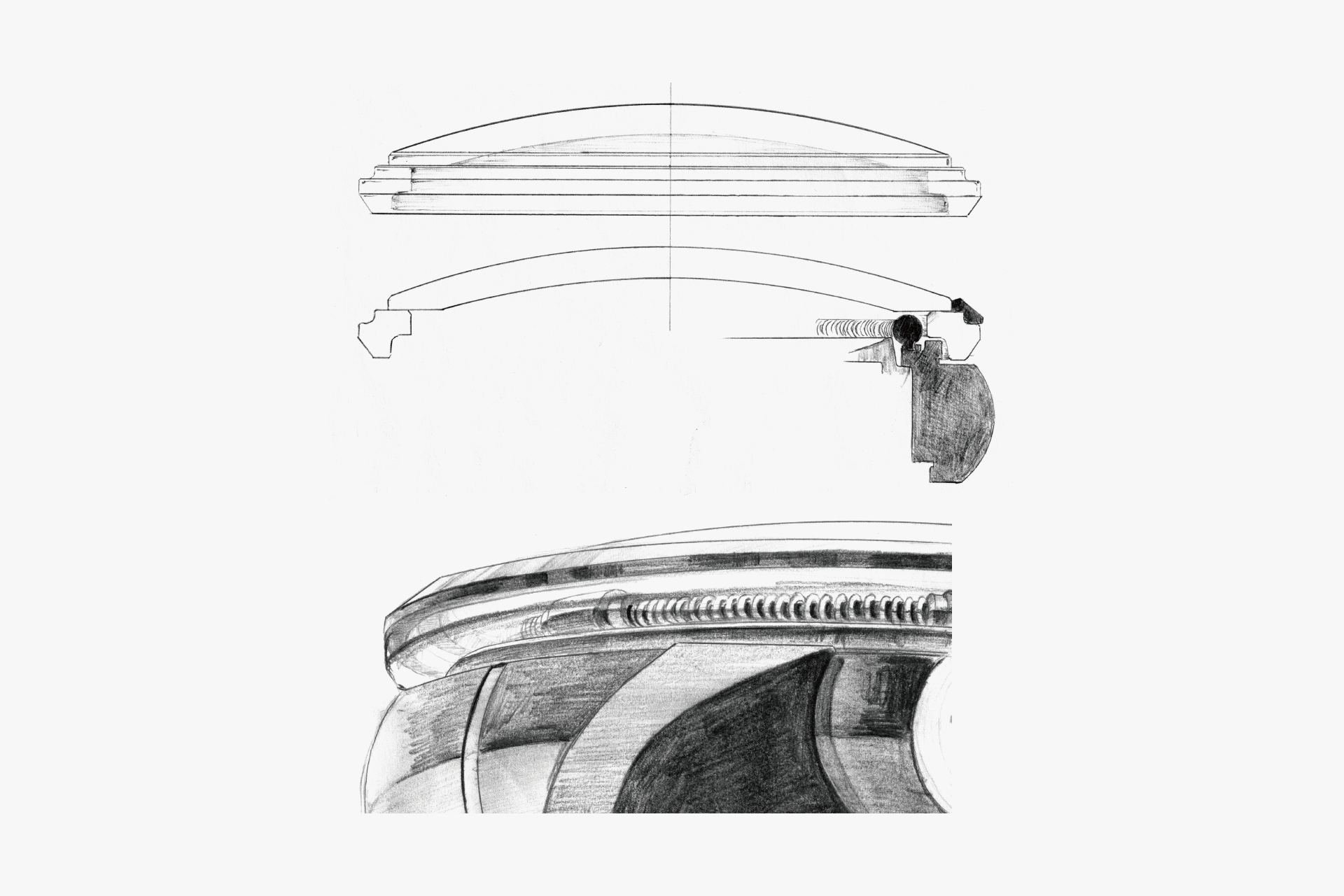
A structure that maximally showcases the possibilities of bonding technology is adopted. By bonding metal bezel parts to the sapphire glass, it creates a sense of openness and novelty, allowing the arrangement of dial components to be seen from the side.
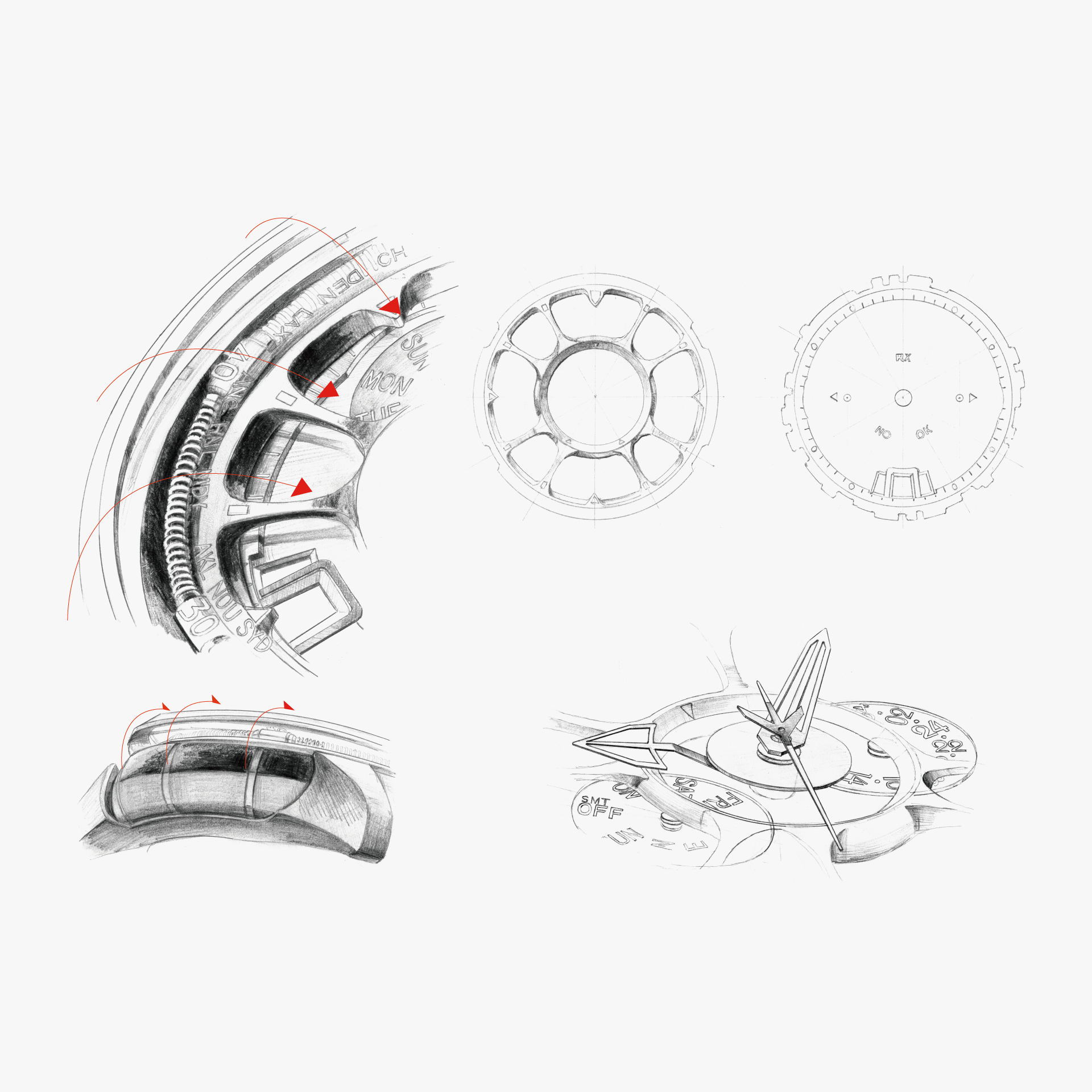
The twelve green lines on the side of the case connect to the dial ring (index). This expresses that the watch receives external force and functions to tell time. The dial construction is surprisingly simple, but the stamped patterns and the shapes of the ring-shaped parts are meticulously designed for spatial presentation and balance when the parts overlap. The hands are three-dimensionally bent to express depth and space, and the use of disc-type display hands conveys a free approach to expressing the invisible passage of time.
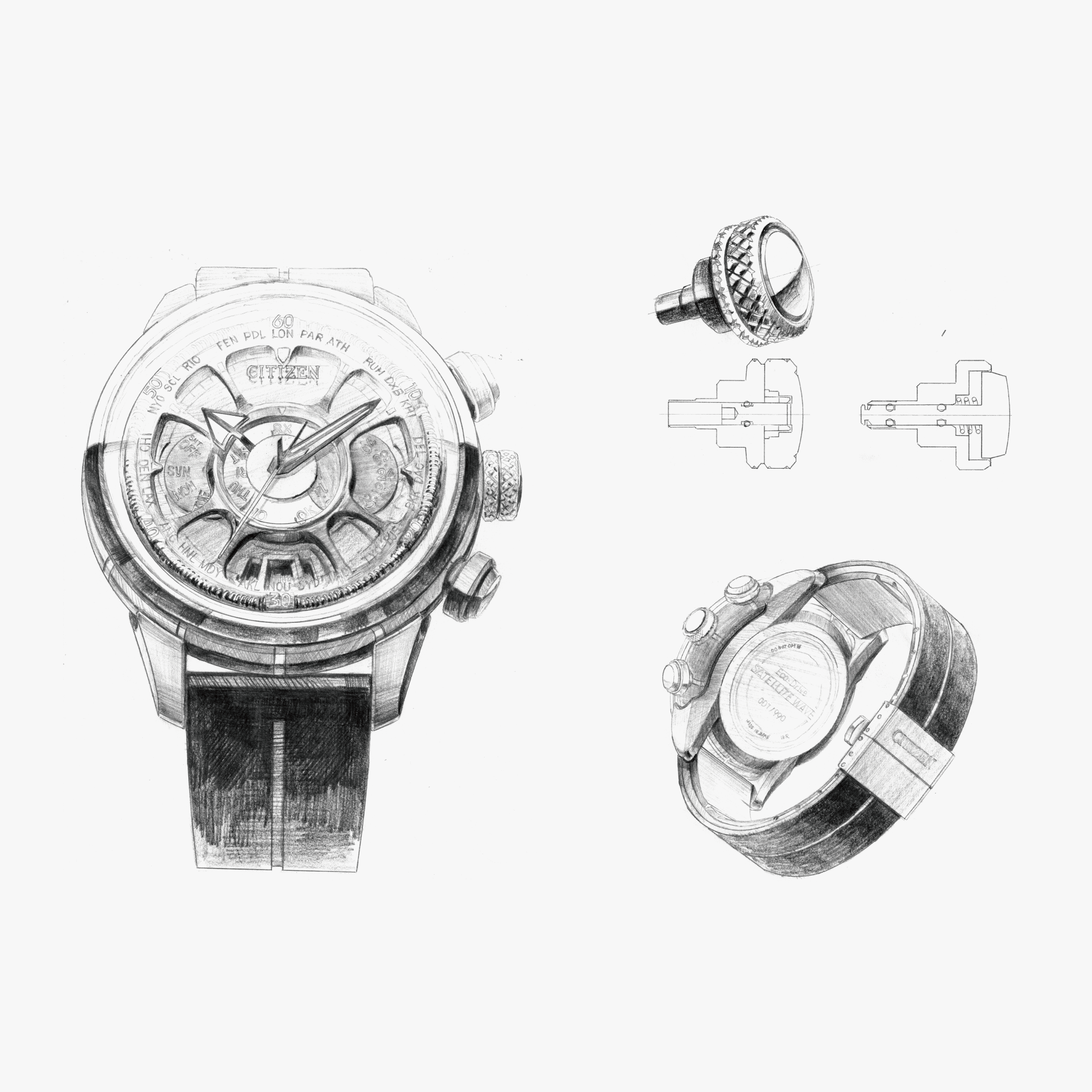
The space packed into the limited area of about 40mm, with each element having meaning and movement, brings the exhilaration of wearing a miniature city diorama on your wrist. The crown and push buttons attached to the thick case feature a unified design detail even in the connecting pipes. A butterfly clasp that opens symmetrically to both sides is adopted, providing a cool appearance for both the model and the user when worn.
ENGINEER'S EYE
Satellite System
The world’s first “Satellite System” analog Eco-Drive radio-controlled watch unveiled at Baselworld. With a movement equipped with the “Satellite System,” it receives time information from GPS satellites orbiting the Earth in outer space at an altitude of about 20,000 km, allowing you to know the precise time anywhere on the planet.
The concept of obtaining time information from satellites dates back to the 1990s. After advancing fundamental development, full-scale development as a watch began in 2007. Roughly twenty years later, a concept model was exhibited at Baselworld 2011, and mass production began in June of the same year.
From an exterior-design standpoint as well, development reached an unprecedented level: starting with a ceramic case to improve signal reception sensitivity, followed by sapphire glass, a separate skeleton bezel structure, 3D bent hands, spiral parts arranged around the outer rim of the sapphire glass, wheel-shaped molding of the dial, and the development of a side two-color molded PU band.
One developer recalls never forgetting the day when, on a flight to a launch event in Italy, they attempted to receive a signal by pointing toward the sky from the airplane window and succeeded instantly. It was a world first achieved after overcoming countless challenges.