This 'World Time' is a model that was sold for overseas markets in the 1970s and clearly showcases the beautiful cutting techniques characteristic of that era.
The 1970s were marked by many historical events, such as the 'Dollar Shock' and two 'Oil Shocks,' which had a significant impact on industrial products and daily life.
Looking at industrial products, many Japanese products were exported overseas during this period, and CITIZEN also produced this 'World Time' as a watch for overseas markets, taking on new challenges in foreign markets where many competitors existed.
In terms of design, the watch body features a simple cut shape, while the functional city names are placed on a rotating ring, achieving a perfect balance between 'simplicity' and 'complexity.'
On the top surface of the watch body, there are sharply conical cut surfaces and hairline finishes, while the ends of the lugs, which match well with leather or metal bands, are boldly and powerfully beveled, resulting in an impressive sense of balance.
Nowadays, it feels refreshing to see a watch crafted with such simple, visibly machined techniques, which are now quite rare.
One cannot help but admire the creators' refined aesthetic and sense of balance that brought this watch to life.
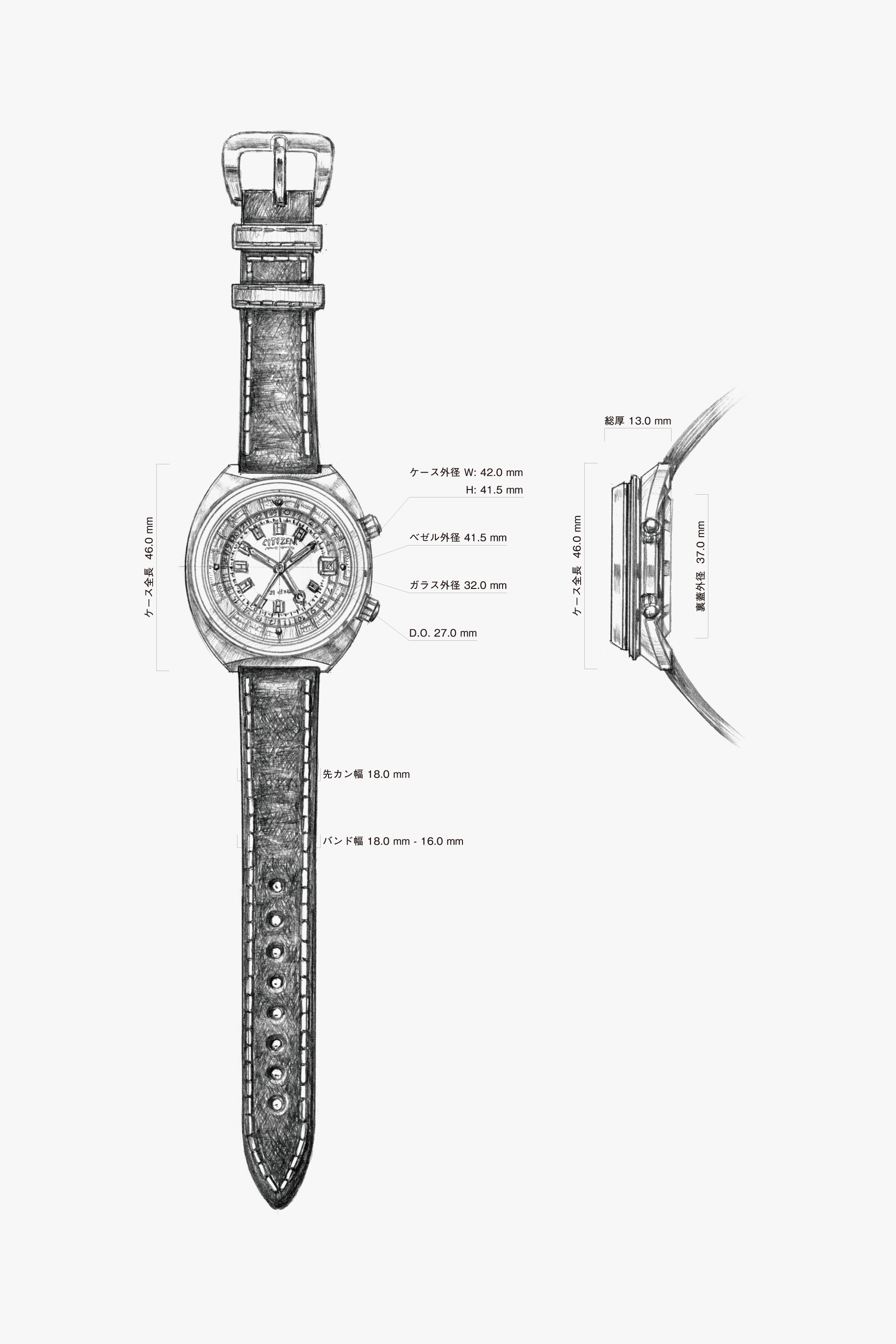
This model is first and foremost characterized by the arc-shaped design of its case. The angular box glass and thin bezel create a sharp impression. The combination of the angular box glass and the repeatedly cut case produces beautiful reflective surfaces.
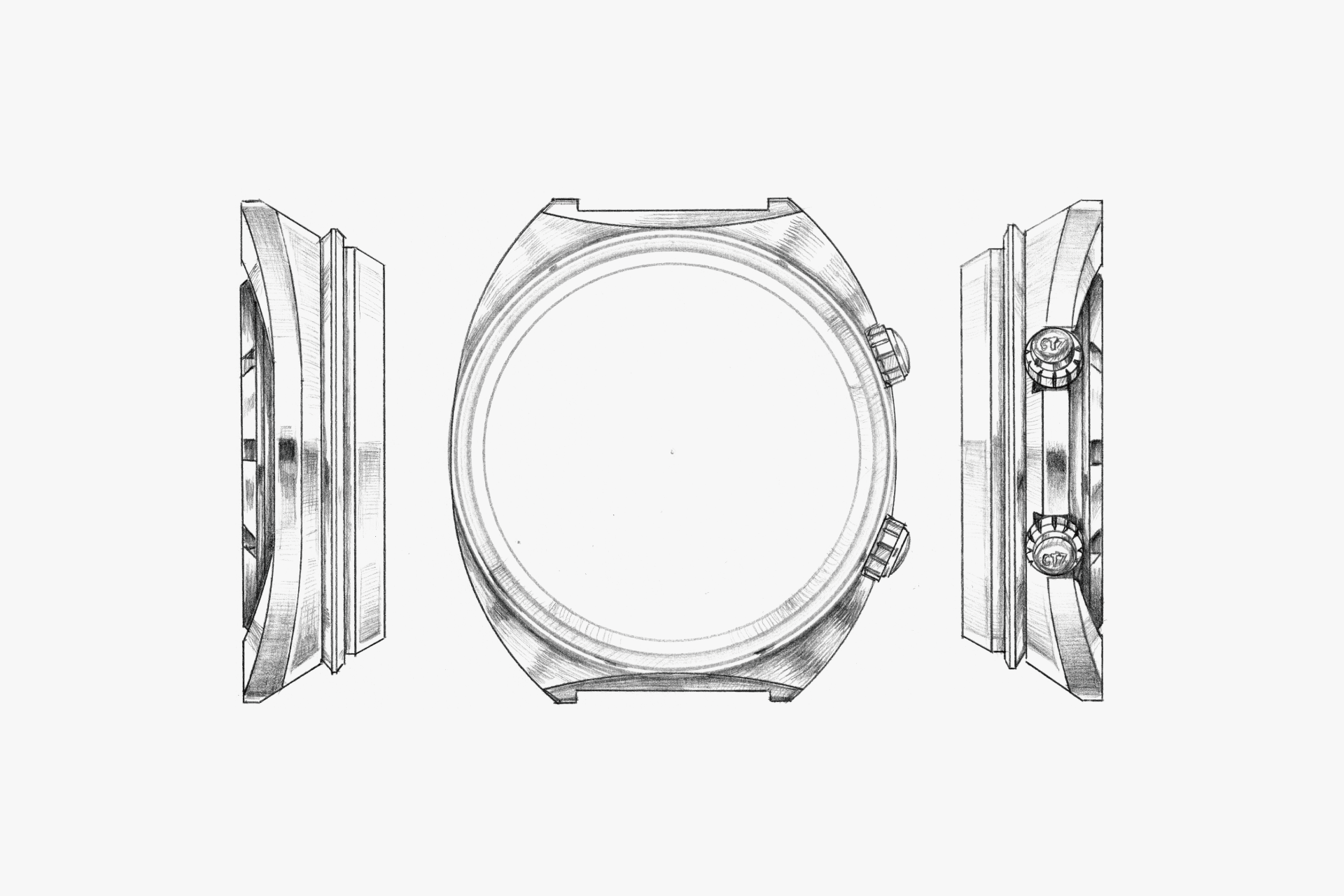
The case has a simple shape that boldly showcases the cutting process. The glass is an angular box shape, giving the structure a strong and robust impression.
The case back is round with a flat cross-section. Instead of laser engraving, there is a stamped mark, and you can also read the word 'Parawater.'
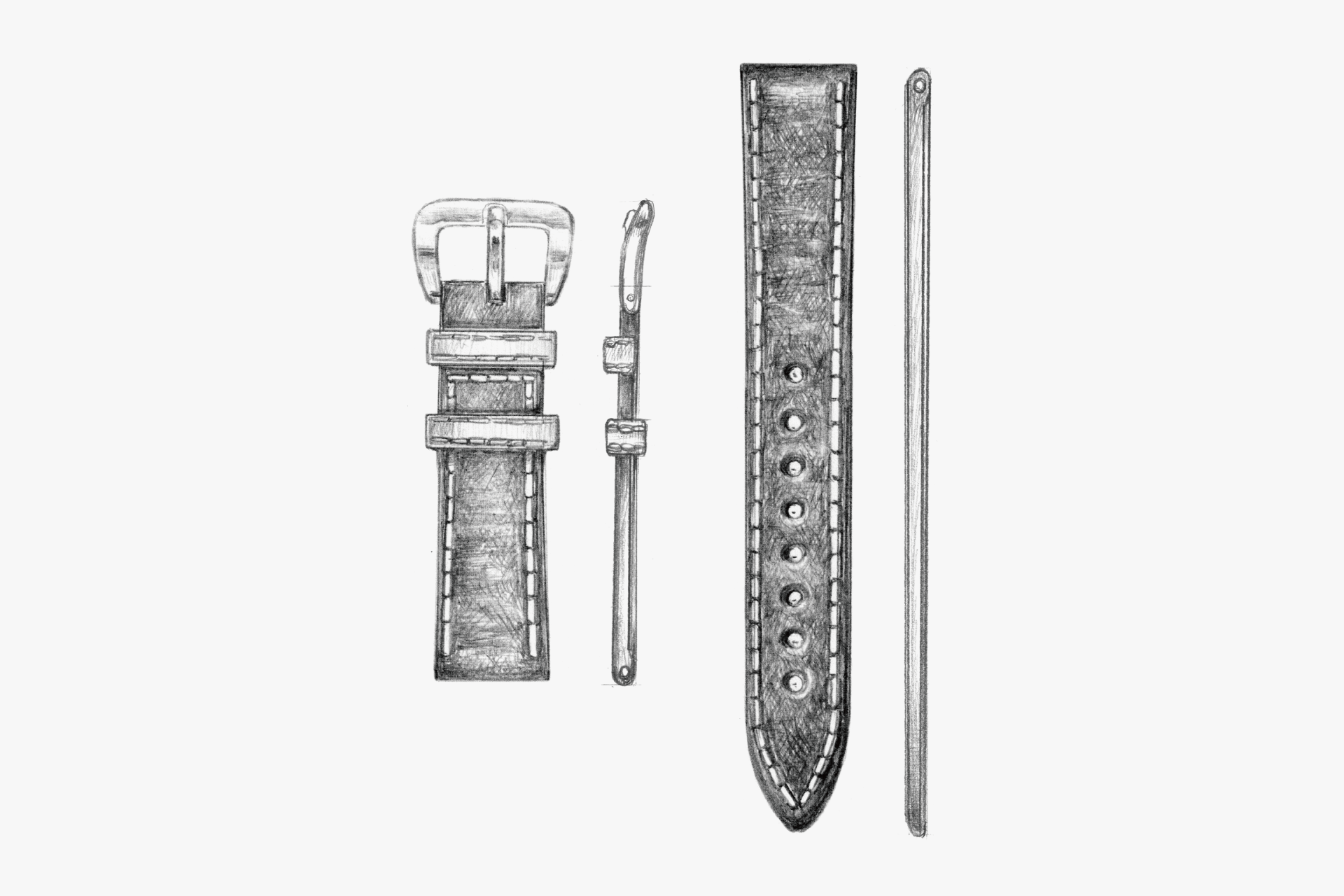
Perhaps because the original leather strap from that time is no longer available, a standard stitched strap is attached. The leather material used has a somewhat rough surface, giving it a rugged feel.
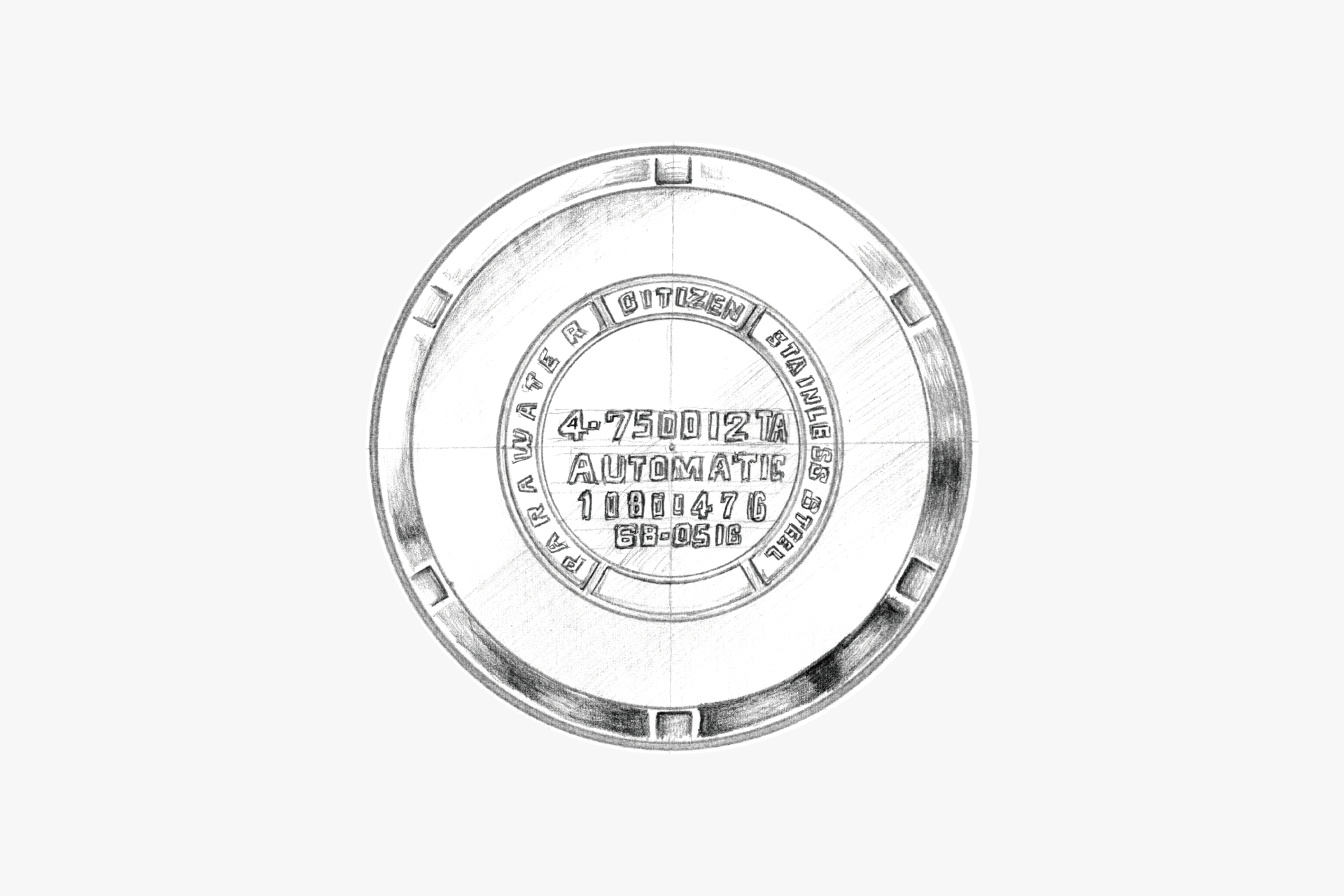
The case back is round with a flat cross-section. Instead of laser engraving, there is a stamped mark, and you can also read the word 'Parawater.'
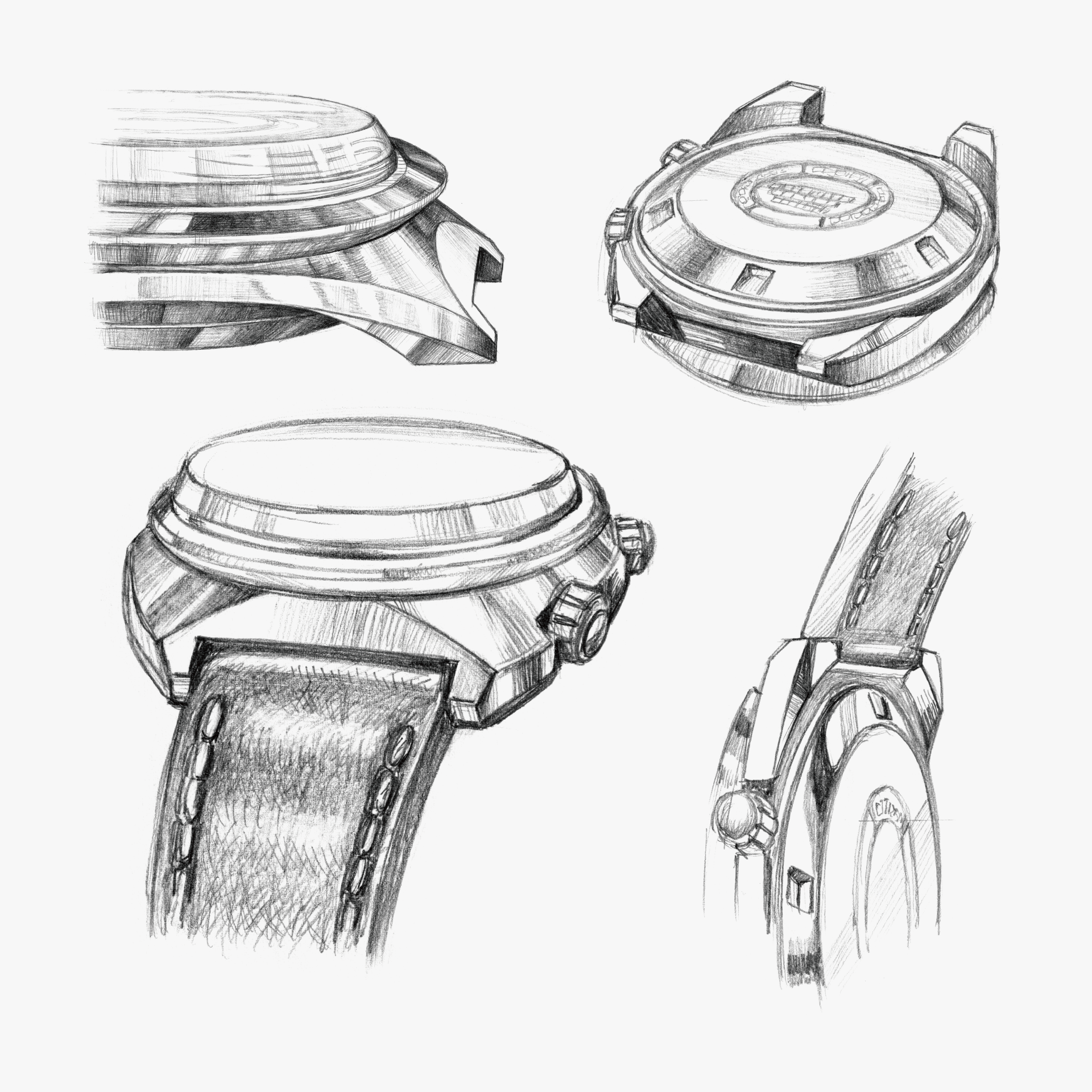
This watch can truly be said to have a beautifully balanced surface composition. While it appears to have a simple shape when viewed from the front, looking at the watch from various angles reveals the 'beauty of cutting,' 'balance,' and 'layered material beauty.'
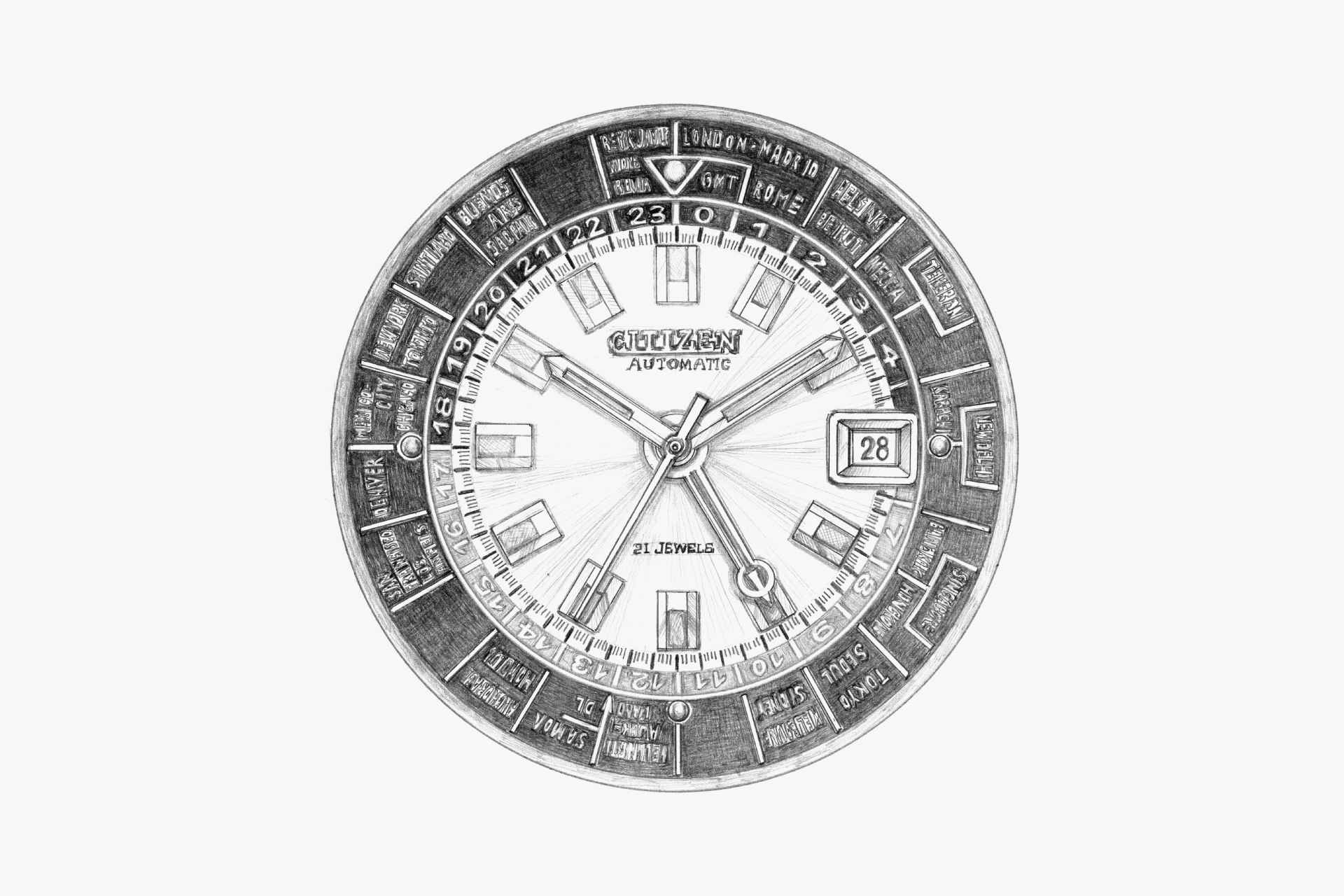
As befits a 'World Time,' the dial design is packed with functionality. The finish of each index is beautifully expressed through precise cutting, resulting in an exceptionally refined look.
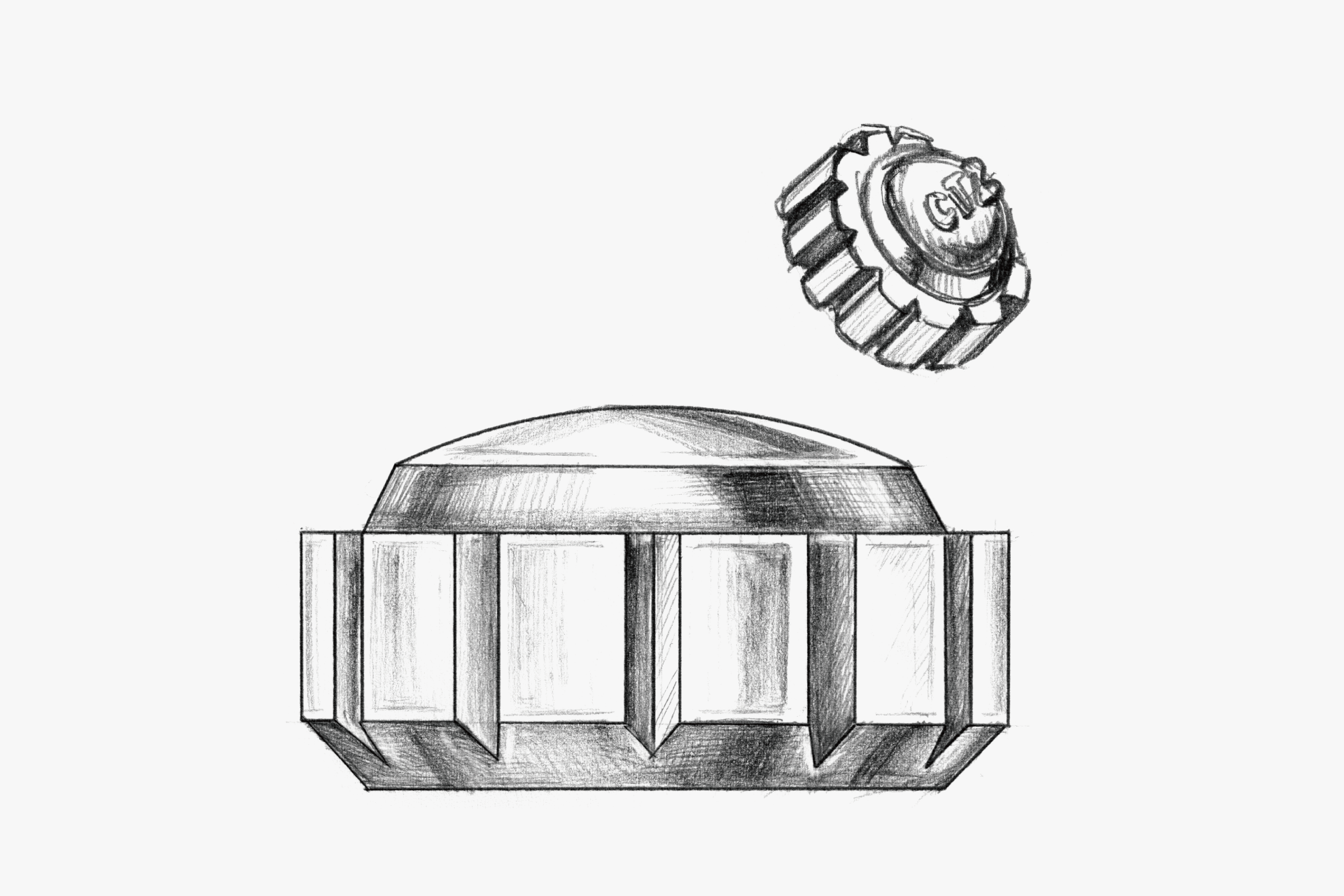
The crown has a somewhat sporty shape. The joint surface with the case features a large beveled cut, which is a distinctive point. The CTZ mark is impressively rendered as a protruding mold.
ENGINEER'S EYE
The lineage of thin movements
Since the Deluxe and Jet, CITIZEN’s mechanical movement design has prioritized thinness. This increases design freedom and benefits wearability.
In the field of automatic winding, the epitome of this approach was the Crystal Seven (Cal. 5200), released in 1965, which achieved a movement size of φ28.0 mm × t4.48 mm with day-and-date display. This was made possible by placing the automatic winding mechanism on the same plane instead of stacking it over the base movement, and it became CITIZEN’s standard design thereafter.
The Cal. 7200 (φ28.0 mm × t4.84 mm) raised the balance wheel frequency of the Cal. 5200 while also improving assembly workability, and it was successively adopted starting with the first Leopard (1969).
This world timer is equipped with the Cal. 7450, which further converts the Cal. 7470 (φ28.0 mm × t4.58 mm)—a simplified interior of the Cal. 7200 with the day-of-week display removed—into a four-hand structure (three hands plus a 24-hour hand). Even with the four-hand structure, the thickness remains t4.58 mm, making the most of the base movement’s thin design.