In August 1973, CITIZEN specially adjusted the accuracy of its first quartz watch, Cal. 8810, which had already been released, from a monthly deviation of ±10 seconds to within ±5 seconds, and launched it in October as a special edition. This model embodies the spirit of the engineers and designers of the time, who wanted to present their own quartz technology—which was still novel then—in the finest form possible.
The case boldly features the mainstream cutting techniques of the era, and the dial is made from goldstone. Three cut rubies are set as indexes. The combination of gold hands and ruby indexes floating above the glossy, dark dial gives this model a unique power—almost like a subtle sense of self-assertion—that surely gave its owners a special confidence at the time.
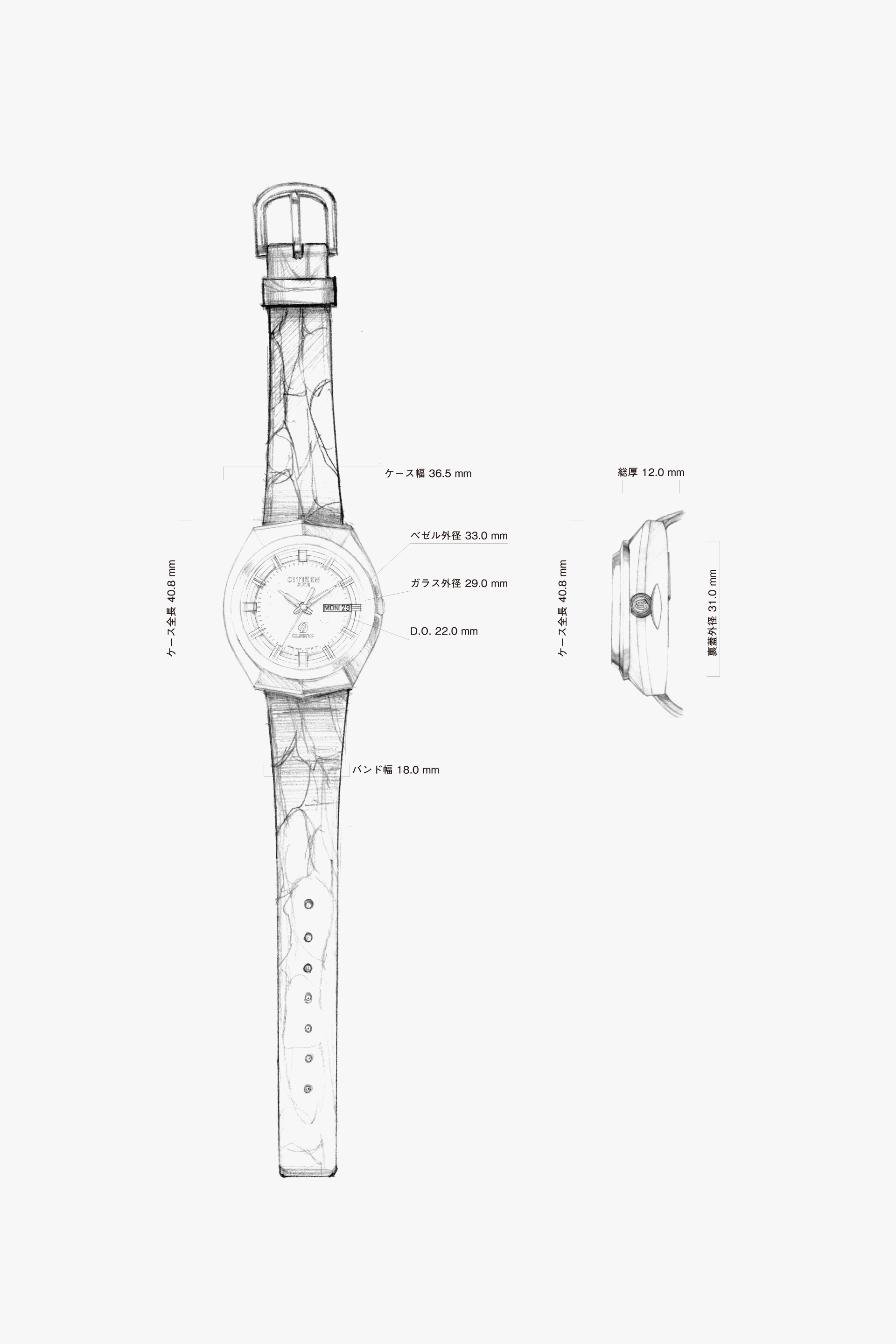
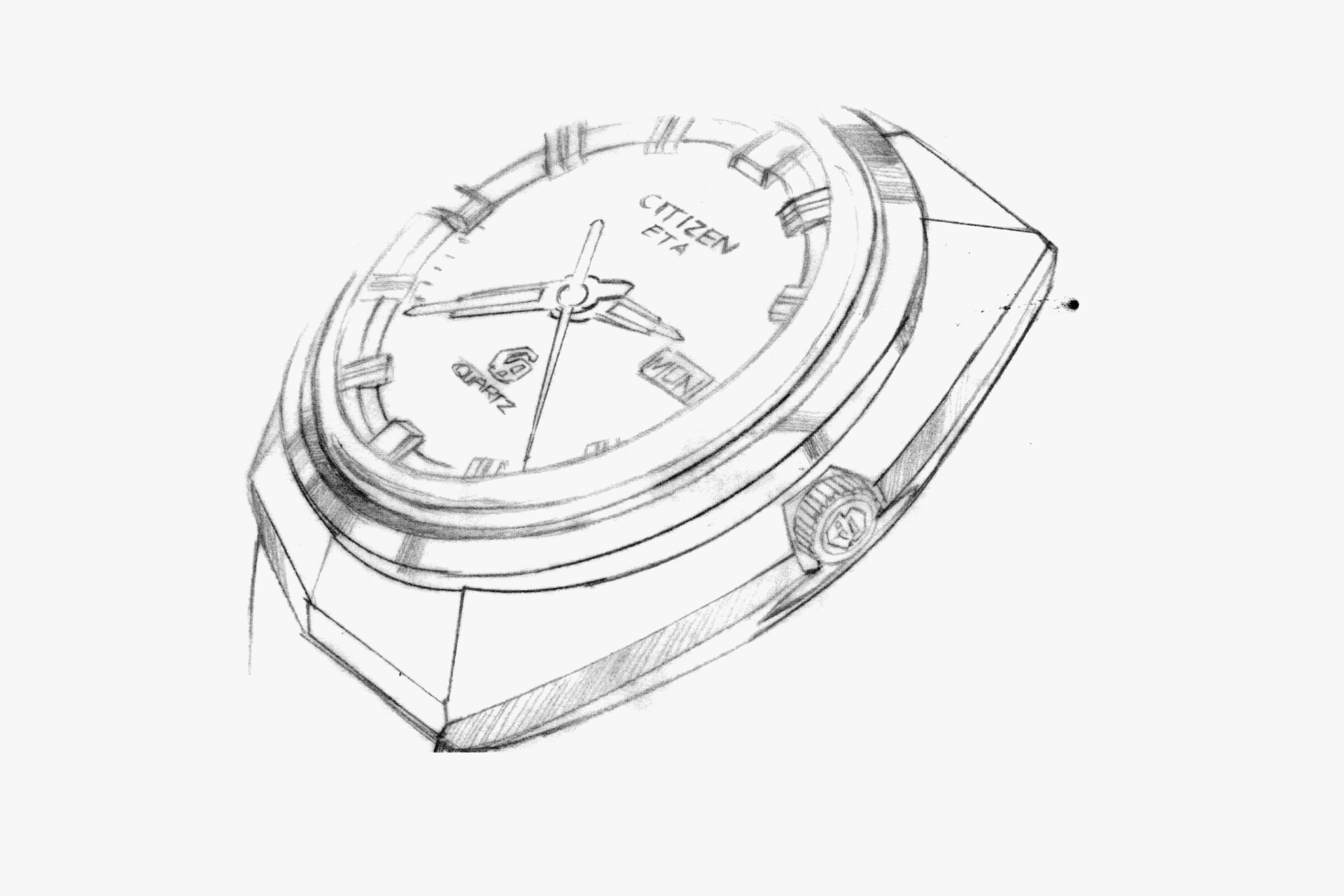
The center and outer frame of the case are made as separate parts. This allows for chamfering on both the top and sides.
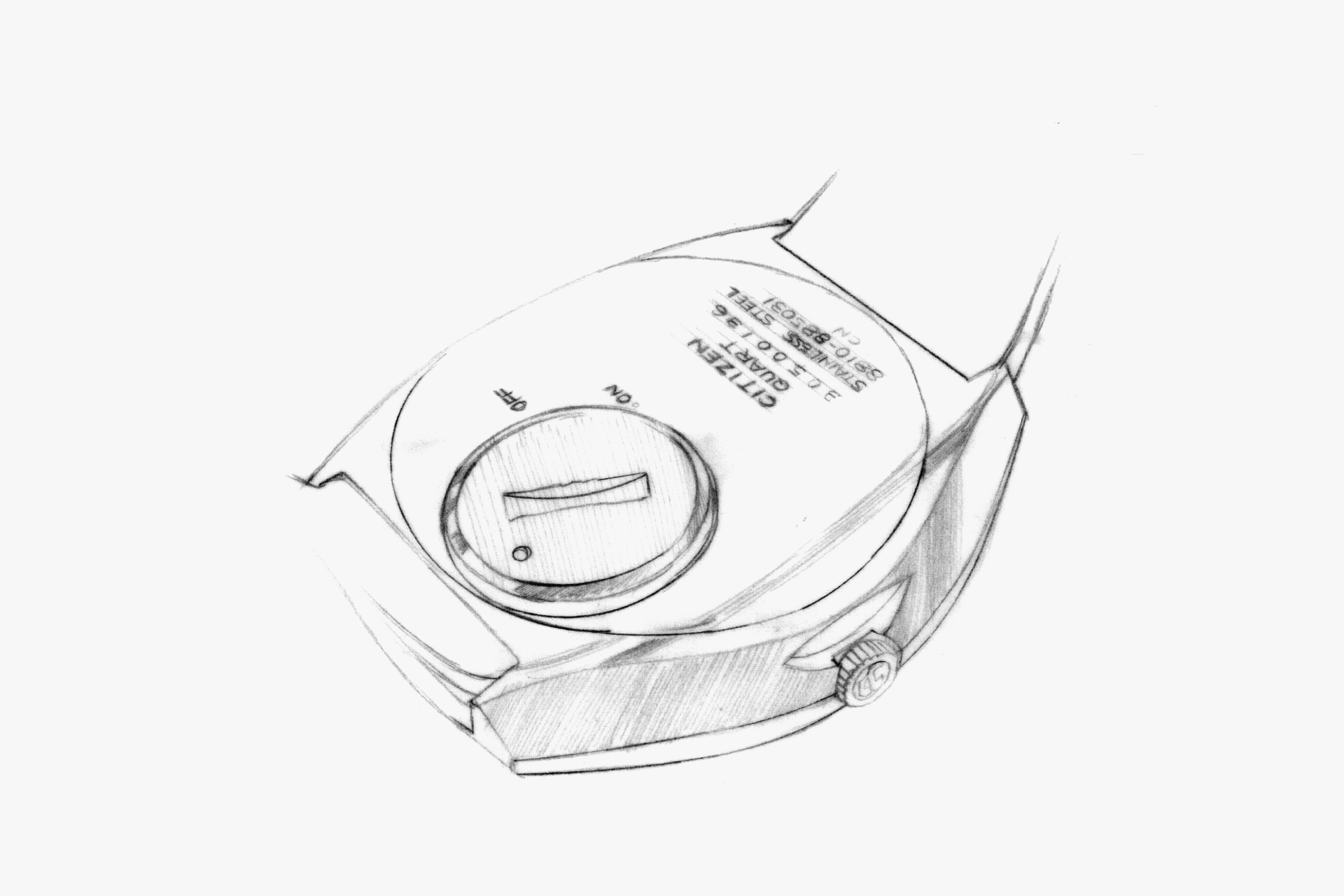
Although the center and outer parts are separate, they are crafted with a continuous curve on the same surface. The polishing is beautiful.
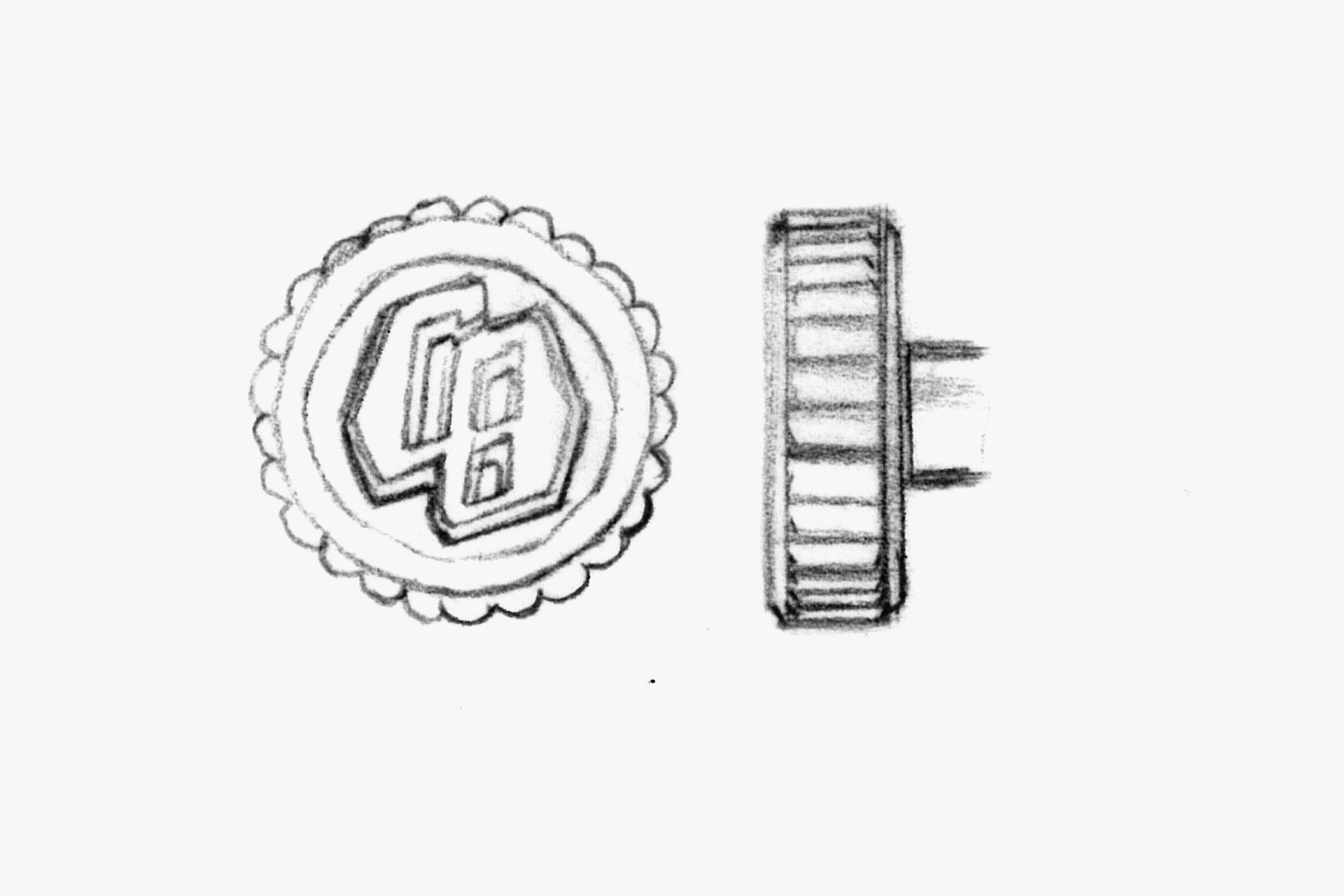
The crown is engraved with the CQ mark for CITIZEN QUARTZ. The coarse knurling provides excellent operability.
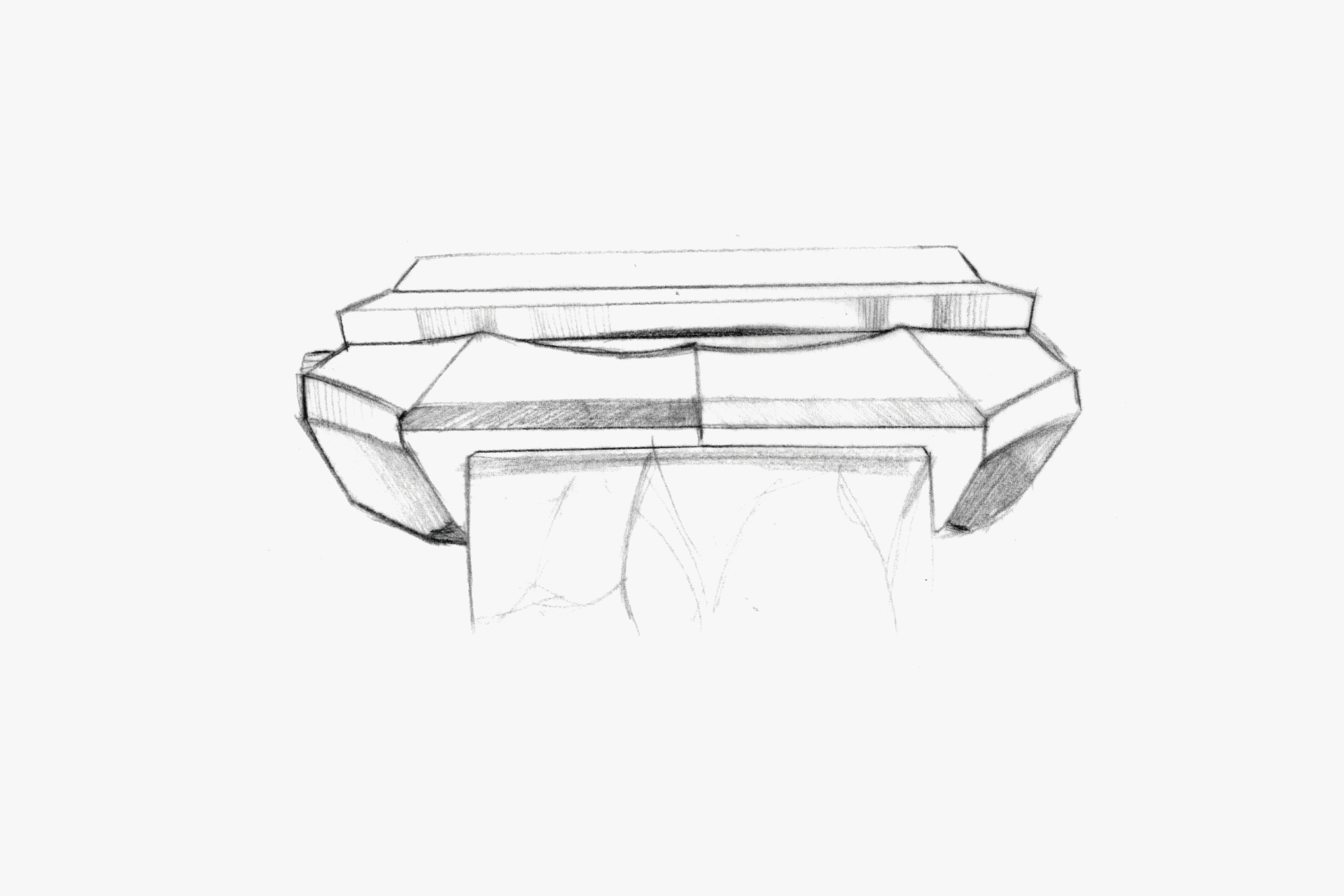
The bezel features a slightly reverse-tapered slope. The main case is chamfered by cutting, making the thickness less noticeable from the side.
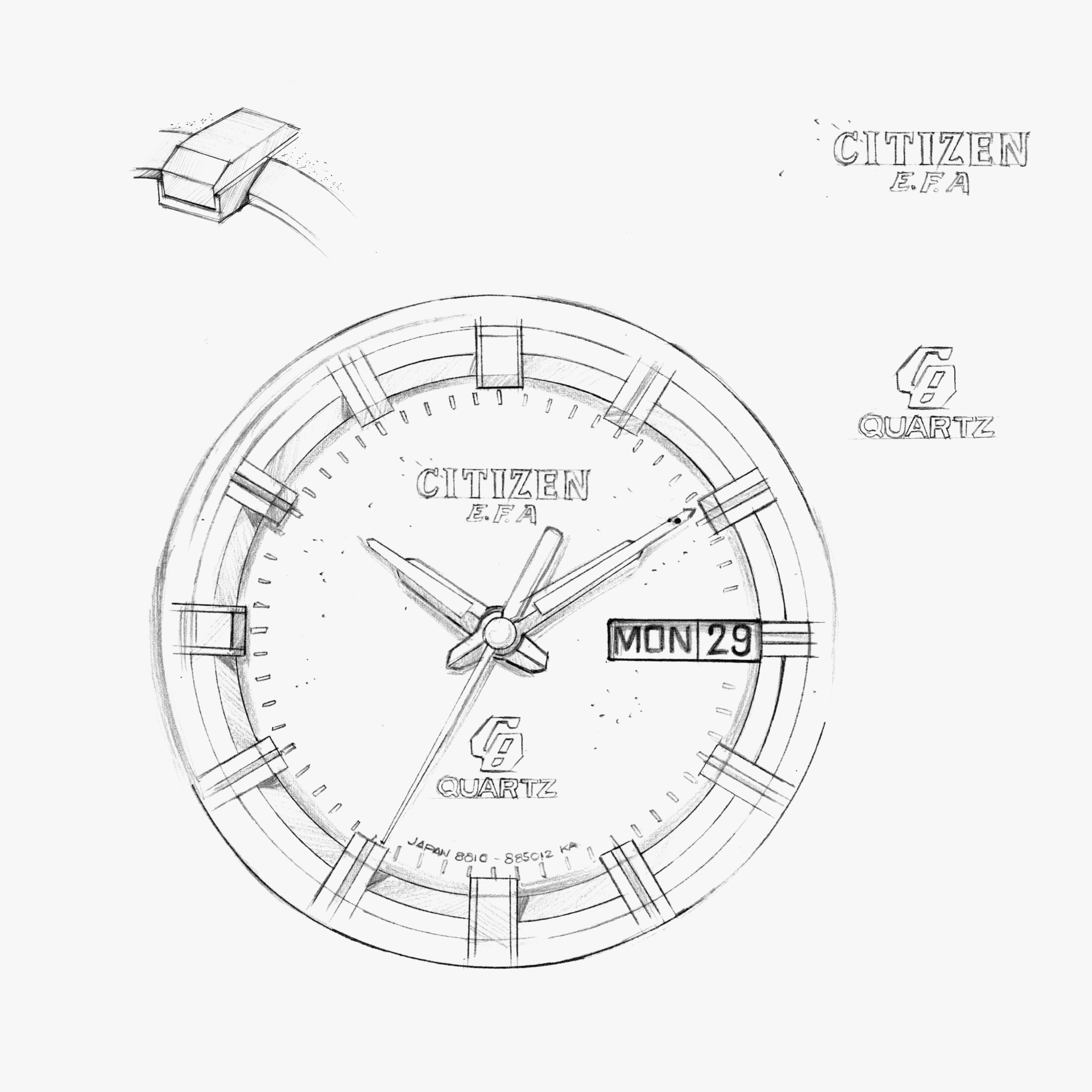
The base of the dial is goldstone, with three rubies set in place. The 'E.F.A' in the layout certifies that this model is a special high-precision piece.
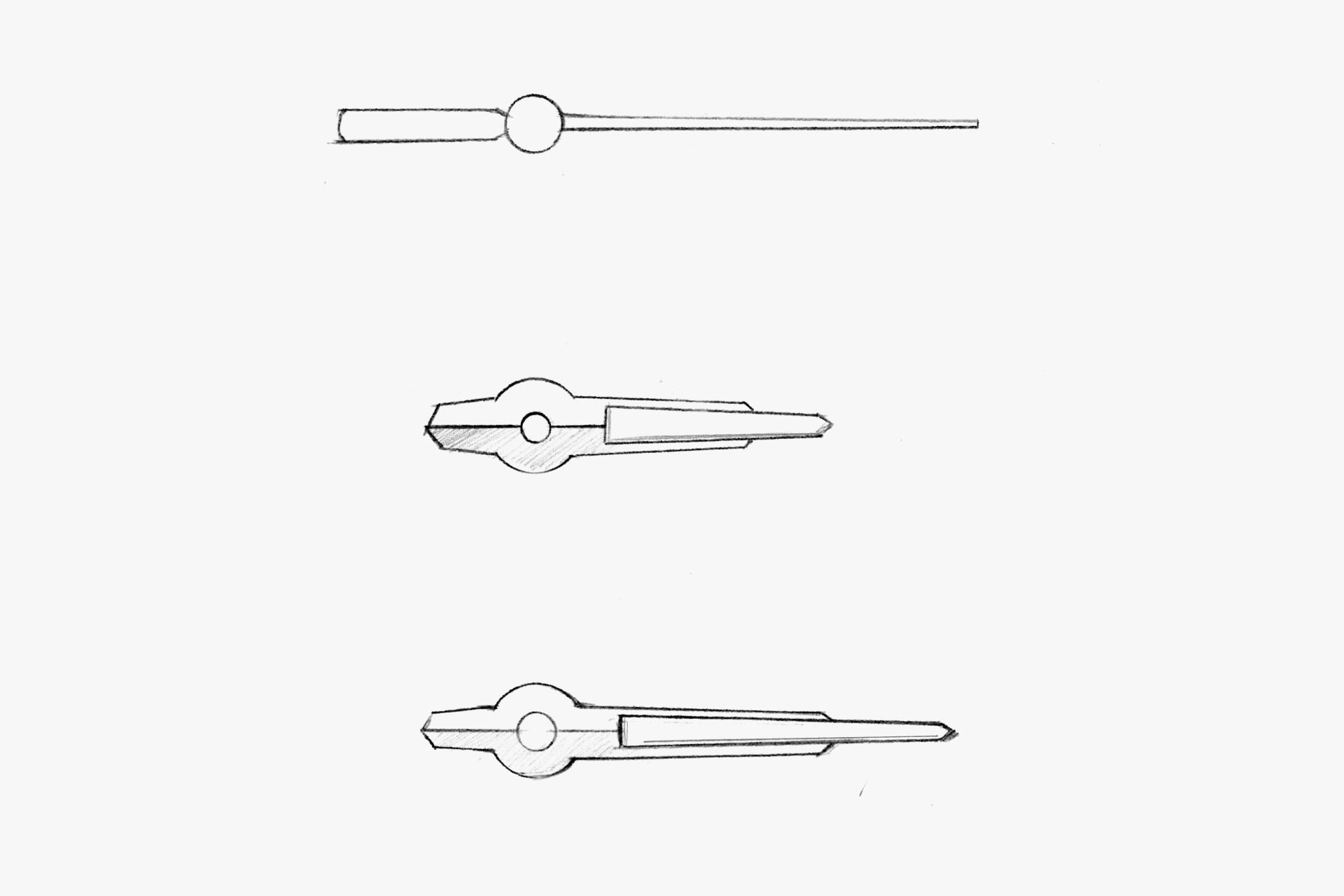
The center of the second hand is non-hole. The hour and minute hands are each made from two separate parts, finished with both sand-blast and polished techniques.
ENGINEER'S EYE
Pursuing to within ±5 seconds
Launched in 1973 under the name “E·F·A,” this was CITIZEN’s first “special high-precision” quartz watch, with its precision pushed to twice that of standard models (±10 seconds per month) to achieve ±5 seconds per month.
Internally, it inherited the structure of the electronic watch “IC-12” that CITIZEN was manufacturing at the time, adopting a system in which a balance (resonant) motor is driven by electrical signals synchronized to the quartz. As a result, it features 16 Hz sweep seconds, which became a hallmark of the model.
The quartz resonator employs a Free-Free Bar-Type at 16 kHz, and the circuitry could not be realized as a one‑chip IC; instead, the oscillation circuit used bipolar transistors and the divider stages used MOS, forming a hybrid IC. Consequently, battery life was one year, and it had drawbacks such as the hands being prone to losing alignment due to shocks and other disturbances. However, its susceptibility to shocks was quickly improved by adding a circuit that compensates when the balance motor’s motion is affected by disturbances, thereby enhancing reliability.