At the time of its release, this model achieved the goal of having the 'world's thinnest movement,' and its design incorporates 'delicacy' throughout. From the perspective of a watch as something to be worn, evolving to become thinner is, in a sense, inevitable. On the other hand, miniaturizing and slimming down the mechanical design requires advanced technology, making the parts and their assembly increasingly delicate.
The design of this model, which highlights such a delicate mechanism, is unified in its image and takes on a very refined form. Even the simple, streamlined case features fine chamfering, and one of the indexes is expressed with two grooves, with twice the usual attention to detail, making it exceptionally delicate.
Delicacy is also a sign of meticulous craftsmanship, which can be seen as a mark of intelligence. Viewers unconsciously sense this intelligence, and by wearing the watch, one may feel a sense of intellectual satisfaction. The way the thin frame glimmers as it peeks out from the cuff evokes a sense of mature intellect.
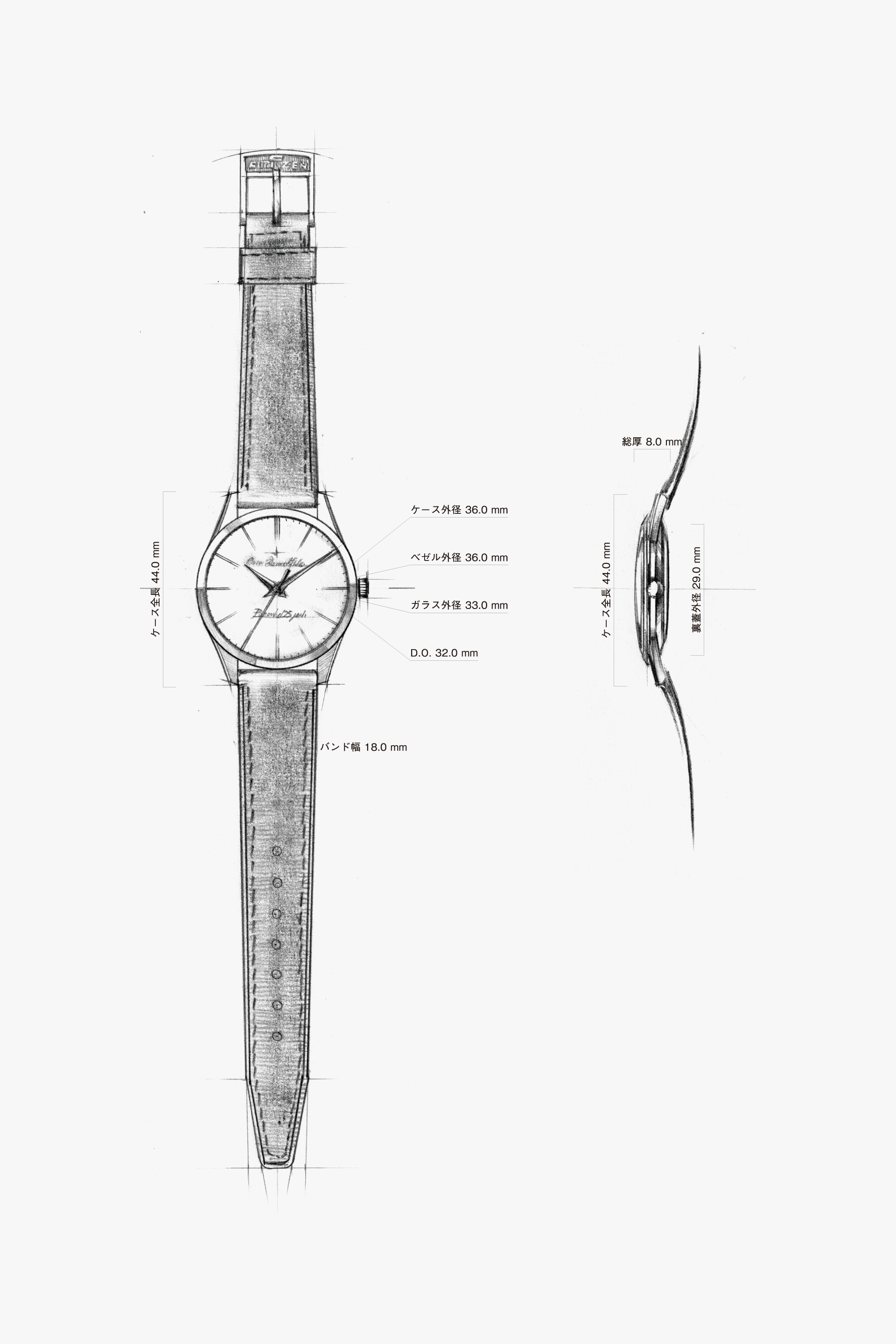
Simple and flowing. Everything is composed of fine lines. The streamlined silhouette, free of excess, embodies the dignity expected of a thin watch.
By raising the center of gravity and making the curve from the crystal to the leather strap shallow, the watch sits closer to the wrist, reducing protrusion and making it appear even thinner.
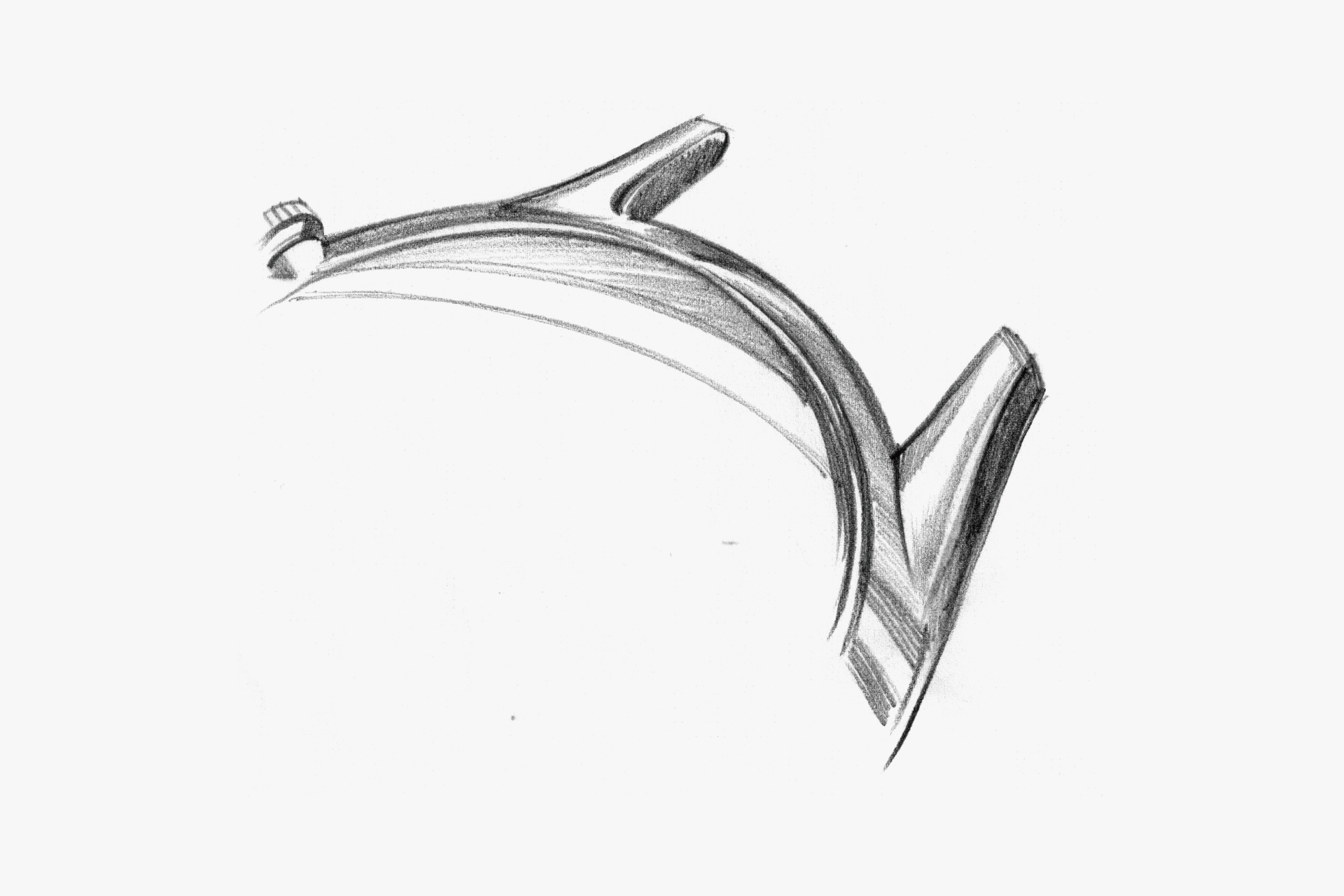
The back, composed of gentle curves, gives a sense of softness against the skin.
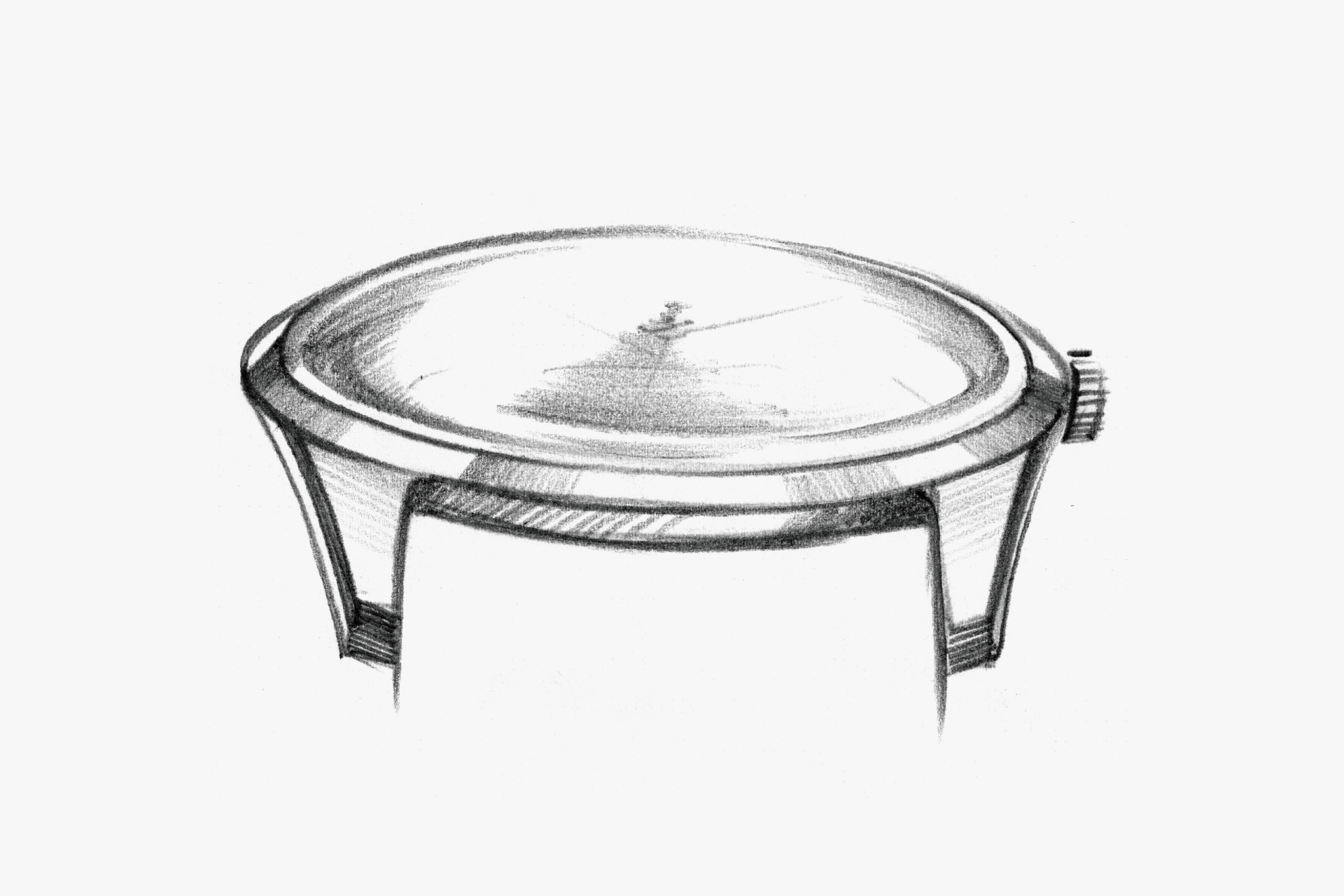
The main case, with a high center of gravity and a gently rounded shape, sits close to the wrist, making the watch appear thinner.
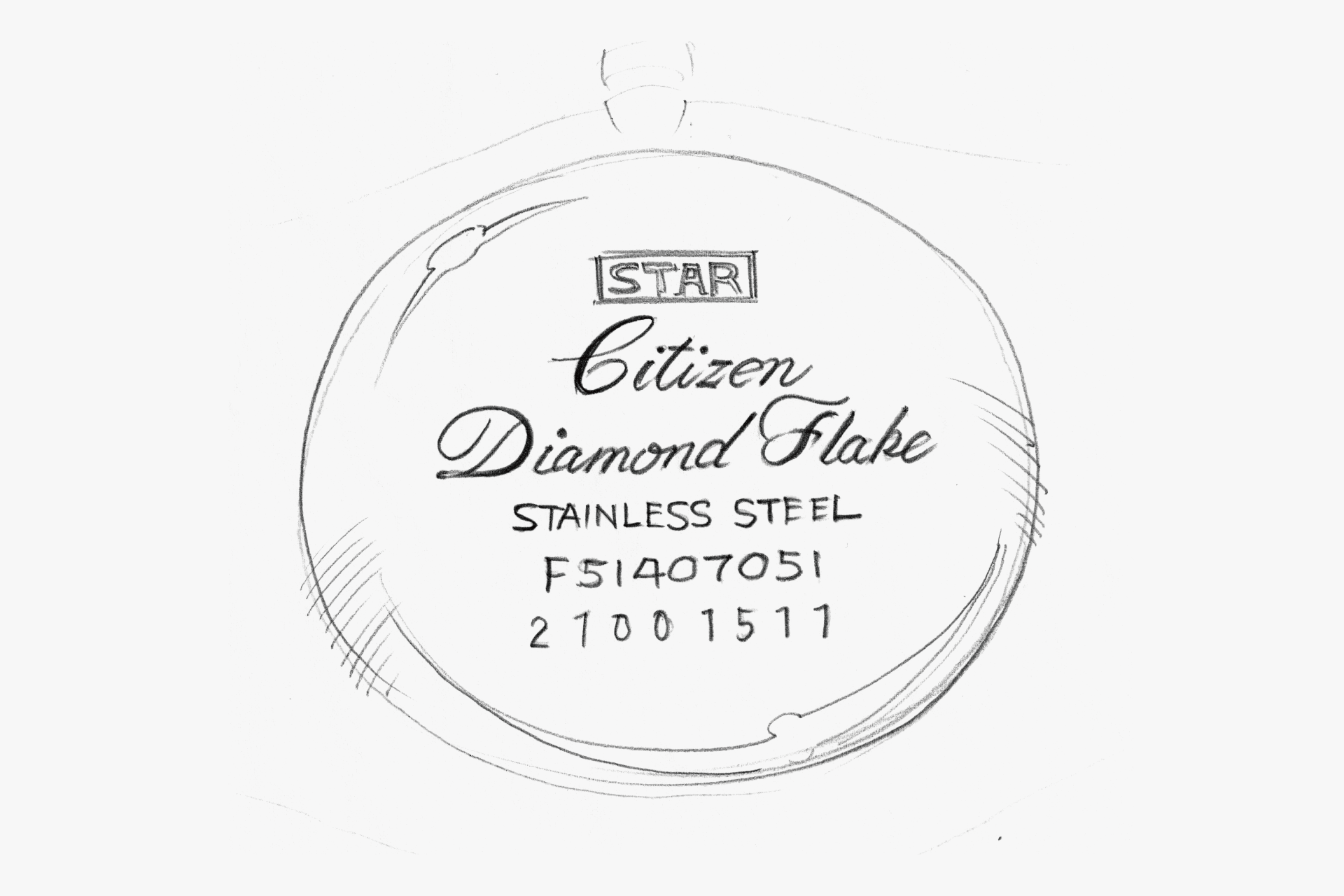
The case back, shaped into a dome, is polished to a mirror finish for a luxurious impression. The cursive etched lettering adds a gentle touch.
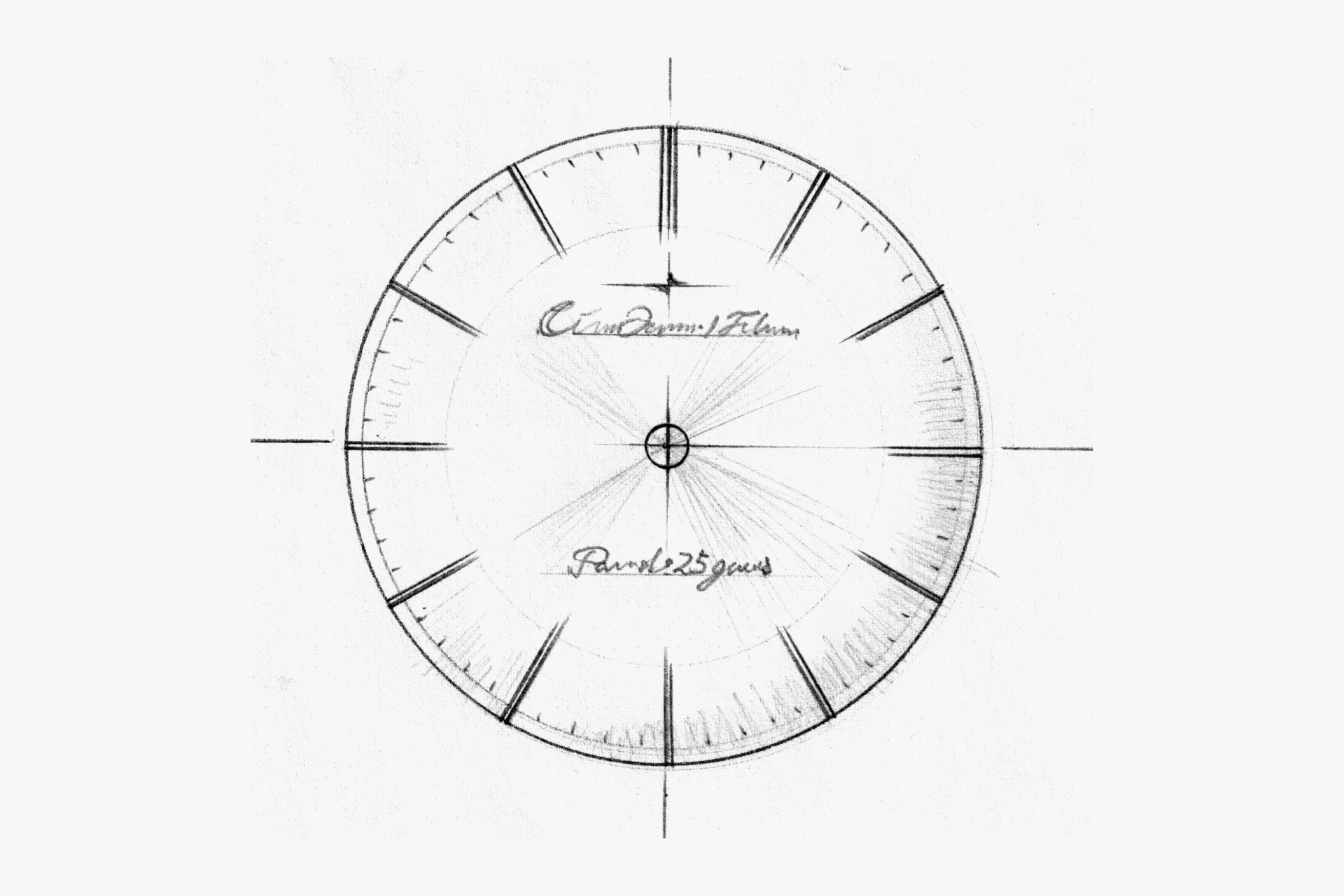
The domed dial, which exudes warmth, is the epitome of simplicity with no protrusions. The delicately cut indexes shine subtly against the elegantly restrained sunray finish.

The cursive printed logo draws the entire watch in an elegant direction. The cross-shaped mark, inspired by the sparkle of a diamond, also gives a delicate impression.
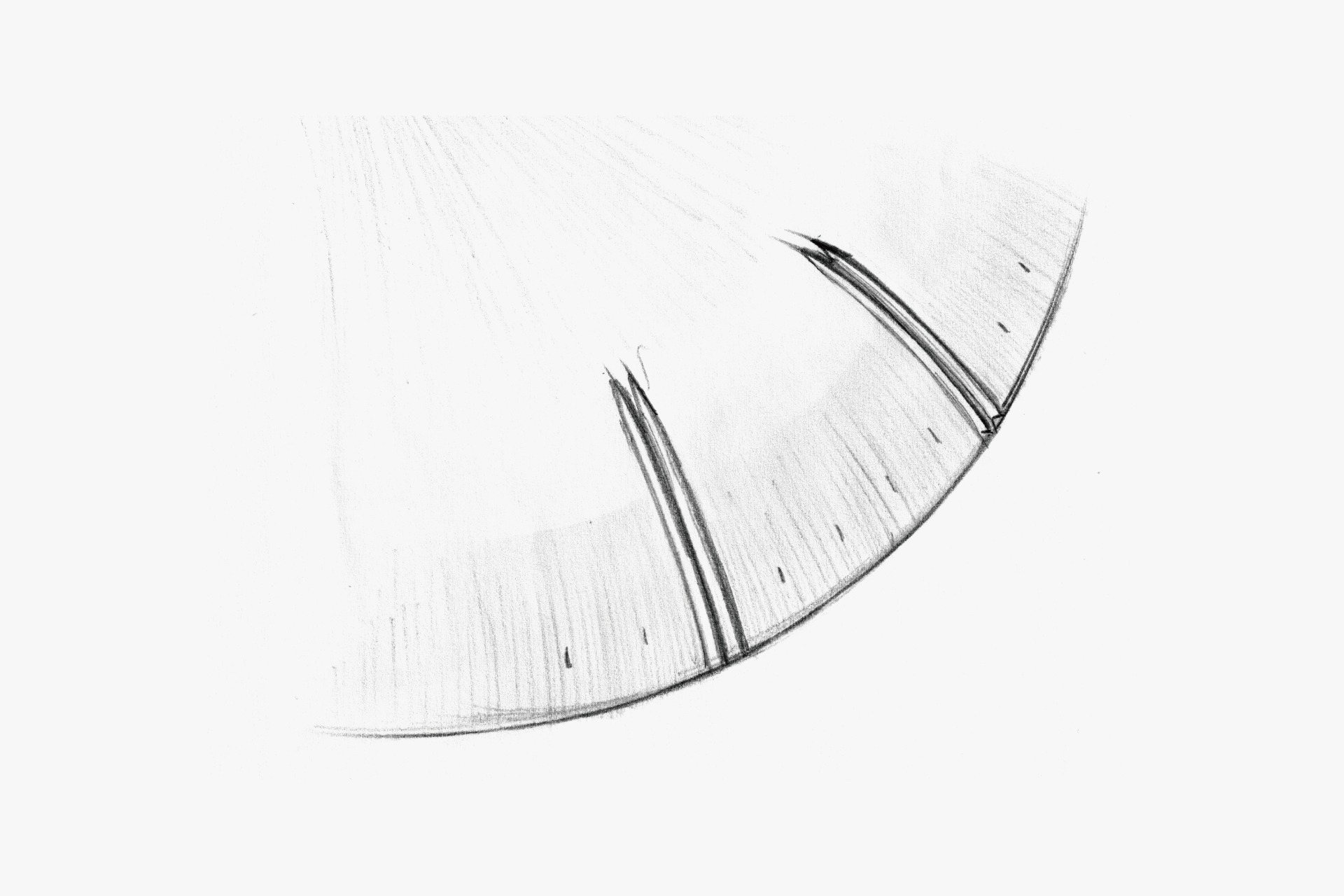
At 12 o'clock, three V-shaped grooves are used, while the other eleven indexes are represented by two each. The way they fade toward the center evokes the image of light, and the closer you look, the more you can appreciate the meticulous craftsmanship.
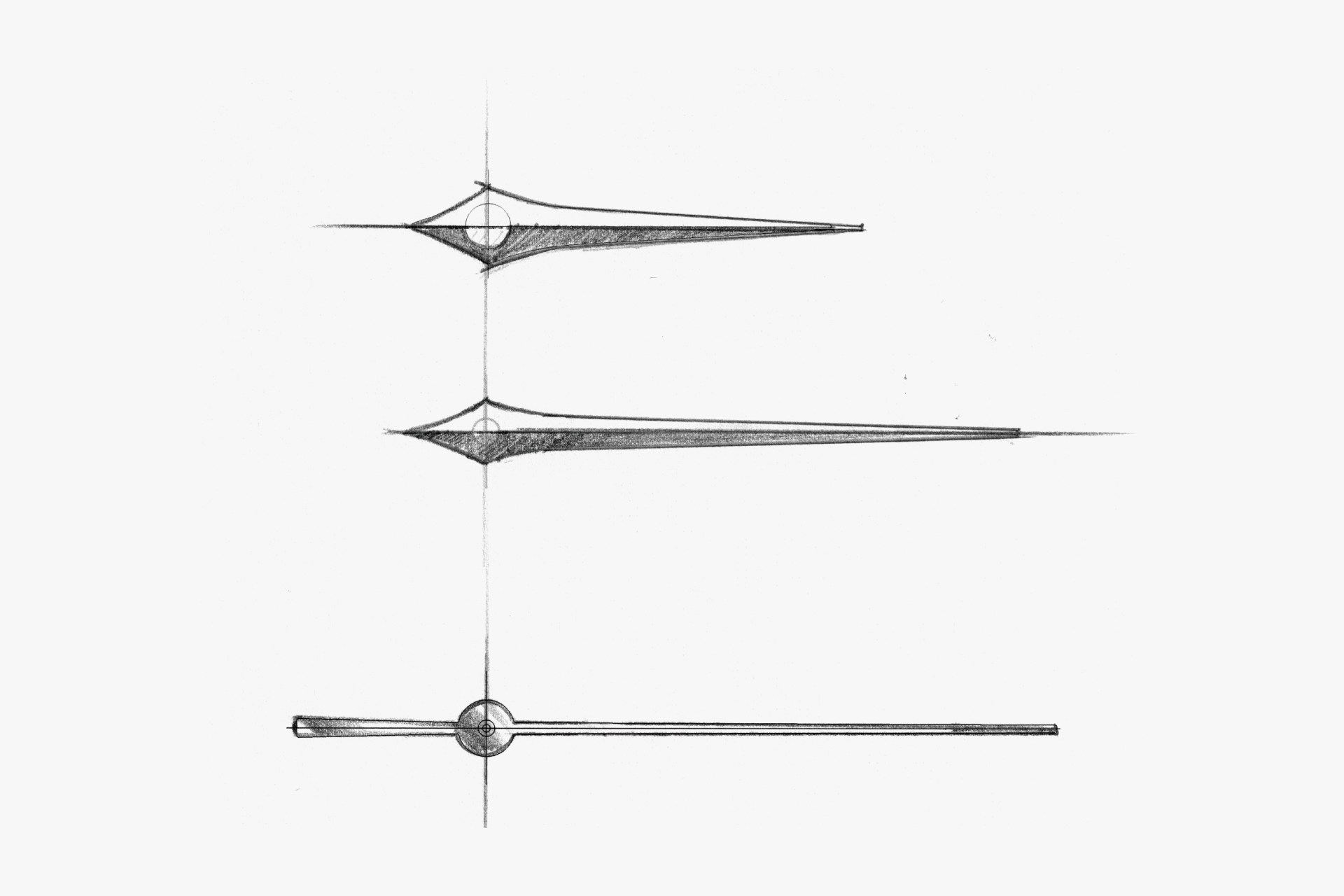
The diamond-shaped hands give a sharp impression. The faceted, mountain-shaped pressing reduces the width of the reflected light by half.
ENGINEER'S EYE
Minimalism
A model whose aim at the time—to create the “world’s thinnest three-hand structure”—is deeply suggestive.
If the only goal were thinness, a two-hand structure, with its gear train more dispersed, should be easier to design. It is precisely the pursuit of the very thinnest in a three-hand structure—deliberately harder to make thin—that represents the true value of this watch. Moreover, regarding the rationale for adopting a three-hand configuration, they seem to have proceeded from the premise of making a “practical, thin, high-grade watch with a second hand,” securing a sufficiently large balance wheel diameter and mainspring barrel torque to maintain precision. They attempted to avoid sacrificing accuracy. To that end, they made considerable changes to the gear train design, and there is a great deal of ingenuity. By skillfully arranging intermediate wheels, the second wheel and the barrel, which would normally sit adjacent, are completely separated. Consequently, the only components that overlap with the barrel are the fourth wheel and the cannon pinion, and it is no exaggeration to say they overcame the inherent disadvantages of a three-hand movement.
The year of its release, 1962, was virtually the eve of a market buzzing with added functionalities such as automatic winding, calendars, and water resistance, and the Diamond Flake became the flagship movement that crowned the last era of minimal, hand-wound watches.